
Sicilian Defense: chess's most popular opening
What would you do if you wanted to play for a win with Black from the very first move? The answer chosen by the best players in the world is the Sicilian Defense: instead of copying what White does, Black creates an immediate imbalance and seeks an asymmetrical fight full of possibilities for both sides.
The idea is simple: the pawn on c5 controls the d4 square without advancing the e-pawn. This way Black doesn’t concede the center, but contests it their own way. The result is a much more complex and rich game than a simple mirror opening.
You play Black. Goal: reach the Najdorf: 1.e4 c5 2.Nf3 d6 3.d4 cxd4 4.Nxd4 Nf6 5.Nc3 a6.
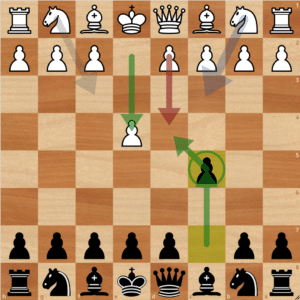
Notice what happens on the board: Black doesn’t have a symmetrical center, but has a pawn on c5 that’s going to cause a lot of trouble. Games tend to be more active, more asymmetrical, and much richer in plans than in mirrored positions. Let’s look at the main variations.
Variations of the Sicilian Defense
Inside the Sicilian there’s an entire world. Let me show you the main variations, each with its own character. The key is that each variation changes the type of counterplay Black seeks and the pace at which the fight develops.
Najdorf Variation
The Najdorf is the most famous variation and probably the most played at elite tournaments. Fischer used it, Kasparov used it, and Carlsen too. Why is it so popular? Because with 5…a6 Black reserves all possible options: they prevent annoying jumps from the opponent and prepare for a middlegame full of resources. It’s the variation for anyone who wants maximum flexibility.
From the Najdorf, White plays 6.Bg5 (classical main line). You play Black: respond with e6, Be7, and prepare to castle.
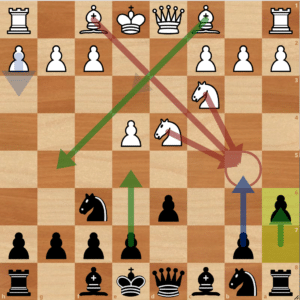
If you like to study and enjoy positions of maximum complexity, the Najdorf is your variation. Once you master it, you’ll have an answer for almost everything White can throw at you.
Dragon Variation
Do you like pure attacking games? Then let’s look at the Dragon Variation. Black fianchettoes the bishop on g7 and creates a devastating diagonal pointing straight at the center and the white kingside. It’s a very direct, very tactical variation, where every move counts.
From the main Sicilian position, play the Dragon's key move: 5...g6 to fianchetto the bishop to g7.
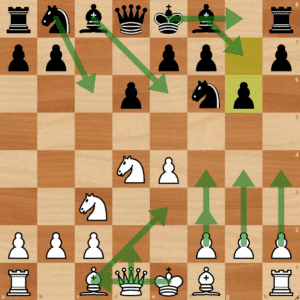
In the Dragon, both sides have very clear plans. White amasses force on the kingside while Black counterattacks on the queenside. That clarity of intentions makes it one of the most useful variations for learning to attack, because it forces you to think in terms of speed and coordination.
Yugoslav Attack in the Sicilian
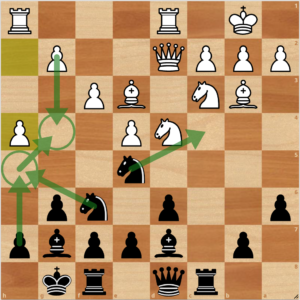
When you play the Dragon, you need to know the Yugoslav Attack: it’s the most aggressive reply White can throw at you. White’s idea is very direct: castle long and launch the pawns toward the black king. And what do you do? Attack too, on the other side, as soon as possible. The game becomes a race to see who delivers mate first.
Accelerated Dragon
The Accelerated Dragon pursues the same ideas as the classical Dragon, but with a different, more flexible move order. By changing that order, Black can save a development tempo and reach the middlegame with different resources. It’s an interesting option if you already know the Dragon and want to surprise your opponent.
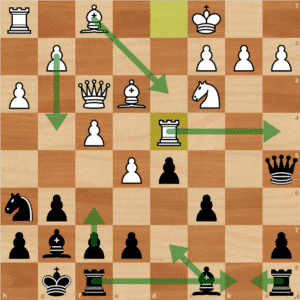
Hyper-Accelerated Dragon
The Hyper-Accelerated Dragon takes that philosophy of speed even further. Black speeds up the fianchetto to the max and seeks a lively game from the very first moves. Some theoretical solidity is sacrificed, but in exchange dynamism and surprise value are gained. If the opponent doesn’t know it well, they can have a very rough time.
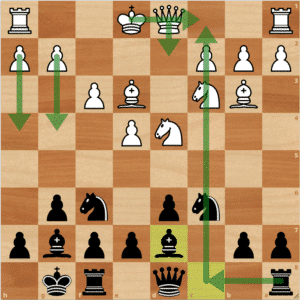
Is the Sicilian good for you?
If you want to play for the win with Black, the Sicilian Defense is your best ally. It doesn’t ask you to equalize, it asks you to fight. That said: it requires you to study a bit more than with other defenses, because there are many variations and the plans have nuances.
But once you master it, you’ll have in your hands one of the most powerful weapons in modern chess. Few openings offer as much dynamism, as many ideas, and as many real winning chances from the very first move.
Related openings: Caro-Kann Defense · French Defense · Chess openings
Analiza partidas de esta apertura
Pega cualquier PGN para reproducir y estudiar partidas paso a paso. Encuentralas en Lichess o Chess.com.
Preguntas frecuentes
What is the Sicilian Defense?
The Sicilian Defense (1.e4 c5) is the most popular reply to the king's pawn. With c5, Black controls d4 without giving up the center, creating an imbalance that offers winning chances.
What are the main variations of the Sicilian?
The main ones are: Najdorf (5...a6), Dragon (5...g6), Scheveningen (5...e6), Classical (5...Nc6), and Kan (5...e6 with a6 delayed). The most popular at the top level is the Najdorf.
Is the Sicilian Defense hard to learn?
It has many variations and is more complex than the Italian Game, but its principles are clear: rapid development, control of d4, and counterplay on the queenside. It's ideal once you've mastered the fundamentals.