
10 Tips to Improve Your Chess Psychology
Chess is far more than moving pieces. Psychology and your thought process decide games as much as — or more than — tactics. If you really want to know how to improve, start with your head.
Let’s go through ten practical tips to get your mind working for you.
1. Fix your psychology first
As you improve, you’re not just correcting tactical mistakes. You’re also correcting how you think. Your mind is the glue that holds all your chess ideas together. If your thought process breaks down, it doesn’t matter how much you know about openings or endgames — you won’t be able to apply it.
Have you ever made a mistake you’d “never make at home”? That’s psychology working against you.
2. Change how you perceive trades
“I don’t want to lose my queen.” I’ve heard it a thousand times. But that thought adds unnecessary emotional weight to something that should be a cold calculation.
When you evaluate a trade, don’t think about what you’re losing. Think about what’s left. If you trade queens, the question isn’t “am I left without a queen?” but “does the resulting position favor me?” Be objective. Be precise.
3. Don’t underestimate your opponent
You’ll be tempted to when you see a lower ELO. Resist it.
Chess is a game of perfect information: everything is on the board, visible to both players. Your opponent may have prepared the game better than you, may know an opening trap you don’t, and may surprise you. Their rating doesn’t matter.
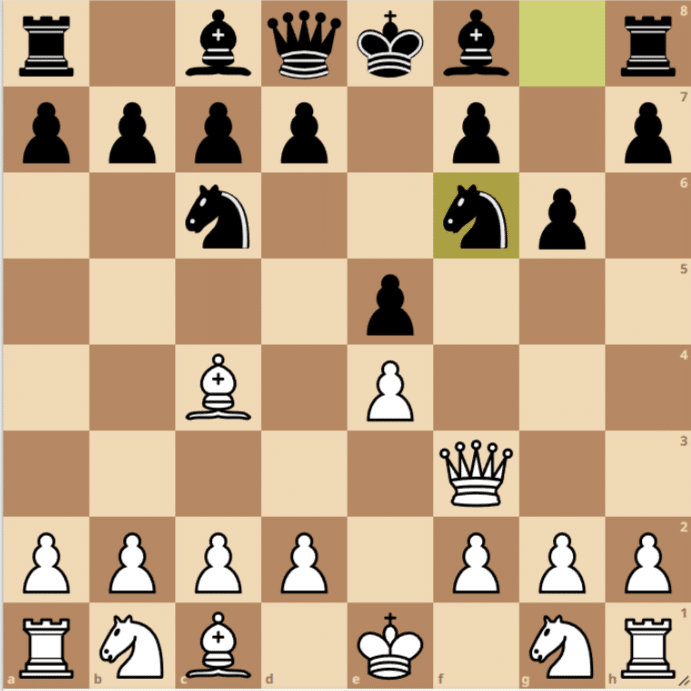
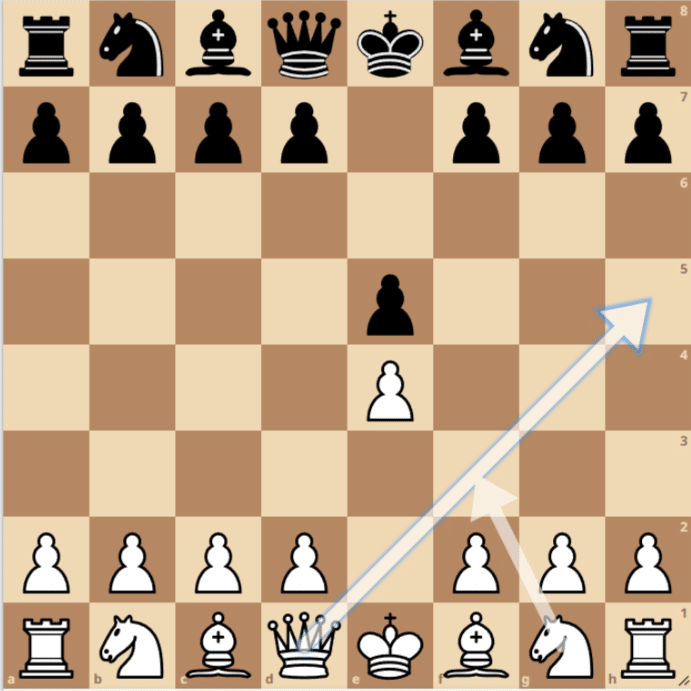
Look at this example: you try to land a scholar’s mate, the opponent defends well, and suddenly your queen is exposed in the center, your knight has lost its square on f3, and Black has already developed two pieces. You went for a shortcut and ended up worse.
Play good moves against everyone. Always.
4. Play what the position needs
Do you see a flashy move? Good. Now ask yourself: is it what the position needs, or just what looks fun to you?
Those aren’t the same thing. A move can be spectacular and counterproductive at the same time.
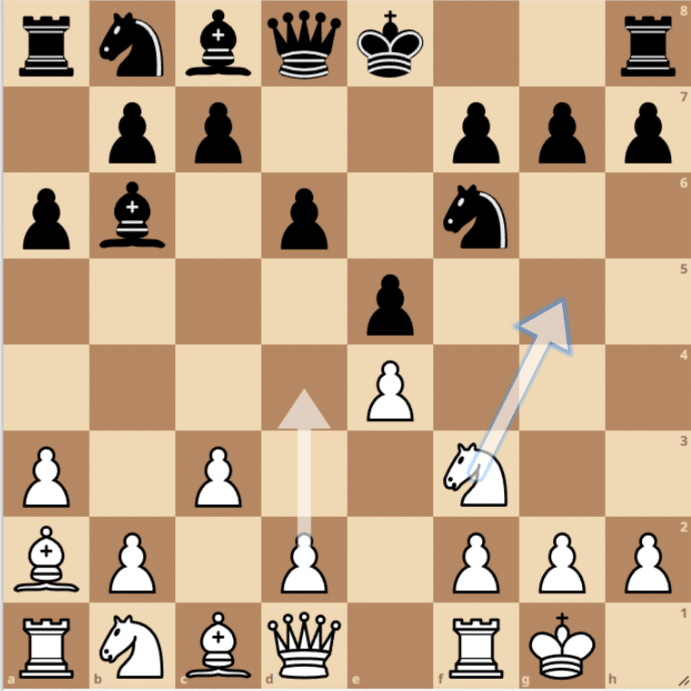
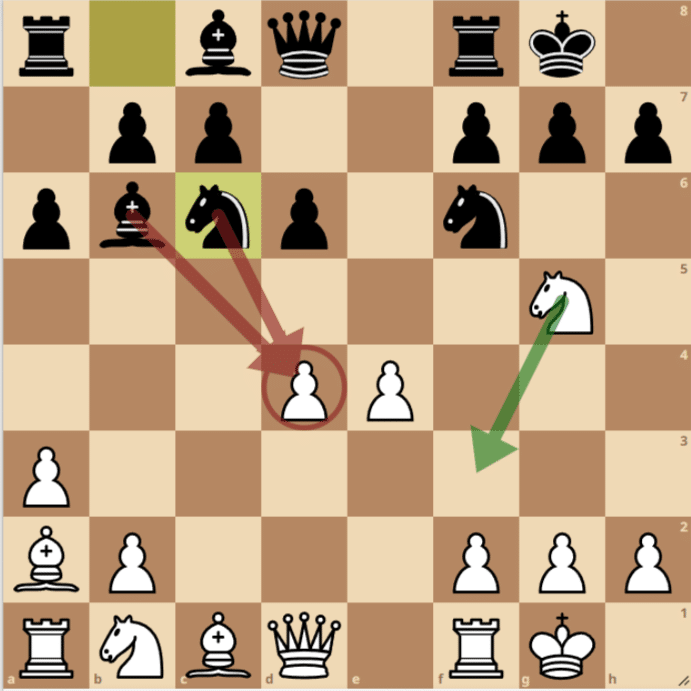
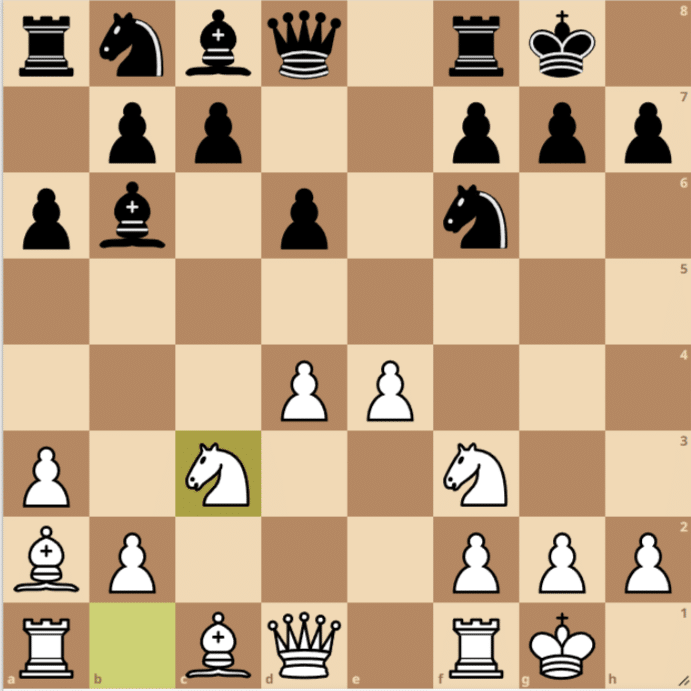
Notice: with 1. Ng5 Black castles, plays d4, develops pieces while attacking the center, and you have to retreat the knight — two lost tempi. The second image shows this clearly.
1. d4, on the other hand, helps control the center and develop. Much more useful. That’s what the third image shows.
5. Stay calm after a mistake
You will make mistakes. I make them. Grandmasters make them too. What makes the difference is how you react in the following moves.
Breathe deeply. Forget the mistake. Evaluate the position you actually have, not the one you wanted to have. You might lose your queen to a blunder and the position can still be defensible — or even good. You won’t know if you keep thinking about what happened three moves ago.
This matters especially in multi-round tournaments. If your first game goes badly, you need to be able to reset your mind before sitting down for the next one. If you don’t, the tournament gets much harder.
6. Choose the right moment to attack
Attacks can arise early, but that doesn’t mean you should attack from move one. A poorly launched attack leaves you worse off than before.
Before attacking, look for real weaknesses in your opponent’s position: undefended pieces, a king stuck in the center, weak pawns. If you can’t find effective forcing moves, improve your position instead. Always ask yourself: which of my pieces could be better placed? Which of theirs could be worse placed?
7. Never give up mentally
Mental surrender happens before surrender on the board. And it’s far more dangerous.
When the position gets complicated, it’s easy to think “that’s it, I’ve lost” and start playing without conviction. That’s the most expensive mistake you can make. As long as the king isn’t checkmated, there’s something to fight for.
Here’s an example: White threatens a fork that looks decisive. Black appears lost. But with 1… Qe7!, if the queen takes the rook, 2… Nf6 is enough, and White can’t save the queen — which gets captured after long castling and Bg7. A positive attitude turns a losing position into a winning one.
8. Look for hidden advantages in difficult positions
When you’re worse, your instinct is to focus on what you’ve lost. Change your mindset. Ask yourself what you have that your opponent doesn’t.
In complicated positions, being aggressive can make your opponent doubt themselves: aim bishops at their castled king, open files, push pawns on the flank where you want to attack. Create danger. Make the side that’s winning prove it.
9. Play to win, not to draw
Playing for a draw is playing not to lose. And that almost always ends in defeat.
When you play passively, you shut off two of your three possible outcomes: you can only draw or lose. Look for imbalances, apply pressure, explore your advantages, even small ones. A draw can come only if you play to win; a win almost never comes if you play to draw.
Don’t settle. If there’s something to fight for, fight for it.
10. Don’t underestimate yourself against higher-rated players
Sitting down to a game already thinking you’ll lose is the clearest mental mistake there is. You’re making it before moving a single pawn.
Every player is human. Anyone can make mistakes, regardless of their ELO. Prepare the game well, study what your opponent might play, and sit down as if it were just another game. If you beat them, it shouldn’t be a miracle — it should be normal.
If you want to understand how to work on mindset alongside technique, read the 3 keys to improving and the concrete plan for going from 1200 to 1400. What time controls you play also matters a lot: clock pressure amplifies every one of these psychological mistakes.
BONUS TRACK
Chess is as much mental as it is technical. Keep a positive, resilient mindset: don’t obsess over material or your opponent’s rating, always look for resources, and play every position as if there’s still something to fight for.
Because there almost always is.
Preguntas frecuentes
Why is psychology important in chess?
Because even technically superior players can lose to rushed decisions under pressure, fear of losing in a winning position, lost focus at the critical moment, or an inability to recover from a mistake. Psychology decides as many club-level games as tactics does.
How do you control nerves during a chess game?
Useful techniques: deep breathing before every important move, standing up from the board to rest your mind, drinking water regularly, avoiding decisions under time trouble (always keep a time buffer), and reminding yourself your opponent is nervous too.
How do you get over anger after losing a game?
The most effective thing is to turn the anger into analysis: identify the exact moment the game turned (not necessarily the final blunder), understand why you made that mistake (time, nerves, lack of knowledge), and plan how to avoid it. Anger without analysis doesn't improve your game.