The In-Between Move in Chess: the zwischenzug that changes everything
The in-between move (in German, zwischenzug) is one of the most surprising ideas in chess tactics. Common logic says that if you get captured, you must recapture. The in-between move says: wait a moment, I have something better to do first.
It’s the move nobody sees coming, inserted between two moves that seemed automatic. And when it appears, it completely changes the outcome of the sequence.
The mechanics of the zwischenzug
The in-between move appears in situations where there’s an “expected” sequence — usually a recapture or a logical move — but before executing it, you play something more urgent:
- A check that forces the king to move
- A capture of a piece that can’t be ignored
- A mate threat the opponent must stop
When the opponent responds to that urgent threat, the position has changed. Now you do recapture — but in a completely different context, usually to your advantage.
The zwischenzug in action
Look at this concrete example:
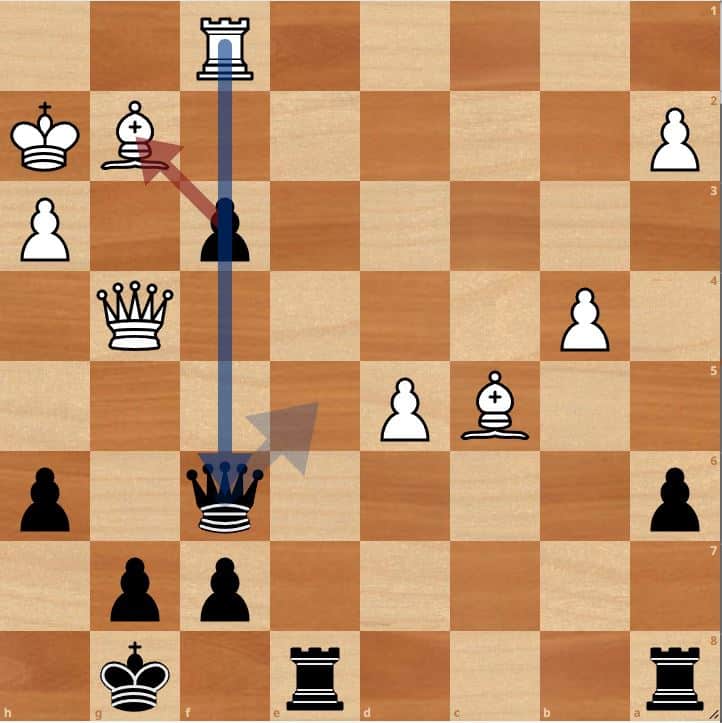
Black has a pawn that can capture the white bishop on g2. The logical move would be fxg2, taking the bishop. But there’s a problem: the white rook attacks the black queen, which in turn covers the pawn. If Black takes the bishop, the pawn ends up pinned and the queen can’t capture the rook.
What’s the in-between move?
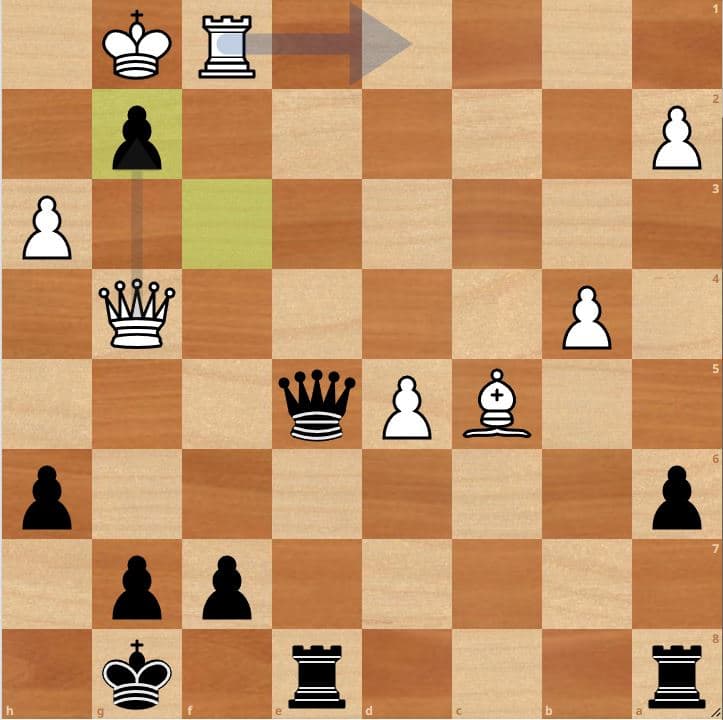
Qe5+ — the queen checks the white king before capturing the bishop!
Now the white king has to respond to the check. White has two options:
Option A — the king escapes: The king moves and now Black can already take the bishop with fxg2 with no problem, because the queen is no longer pinned. The zwischenzug bought them time to get out of the pin.
Option B — the white queen tries to block:
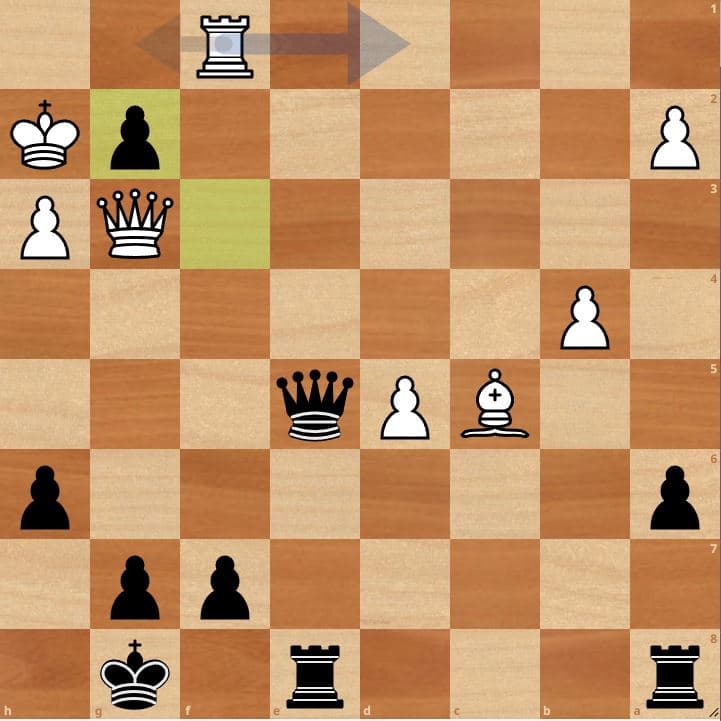
If the white queen interposes to block the check, Black also wins: they take the bishop and the position is favorable for them anyway.
In both cases, the zwischenzug works. The in-between move (the check) completely changed the outcome of the exchange.
The difference between a zwischenzug and a normal move
The in-between move seems to almost “skip a turn” because it interrupts the logical sequence. The key to understanding it is this question:
Is my threat more urgent than the response my opponent expects from me?
If the answer is yes, you play the threat first. The opponent responds to it. And only then do you make the “logical” move — but in a different and better position.
Why the zwischenzug surprises so much
Psychologically, the zwischenzug works because the opponent “assumes” you’re going to respond a certain way. When they see a recapture coming, their mind is already calculating the next move assuming it’s going to happen. If instead you play something else, the opponent may take time to readjust their calculation.
In fast games, the zwischenzug is devastating because the opponent doesn’t have time to recalculate everything.
How to look for in-between moves
Before recapturing or making the “obvious” move, pause for a moment and ask yourself:
- Do I have any check available right now?
- Is there any opponent piece I can capture first?
- Do I have any mate threat the opponent must stop immediately?
If the answer to any of these three is yes, calculate whether that check/capture/threat changes the outcome of the sequence. If it does, you’ve found a zwischenzug.
And from the defensive side: before making the “logical” move, also ask yourself whether your opponent has an in-between move that could ruin your plan. Many players lose material because they assume the opponent will recapture “as they’re supposed to.”
Related tactics: The Pin · The Discovered Attack · The Decoy
Preguntas frecuentes
What is the in-between move in chess?
The in-between move (zwischenzug in German, in-between move in English) is a tactical move inserted before making the response the opponent expects. Instead of making the 'logical' move or recapturing immediately, you first play a more important threat (check, decisive capture) that forces the opponent to react, changing the outcome of the exchange.
Why is the German word zwischenzug used?
The German word zwischenzug (zug = move, zwischen = between) is used because German was for a long time the dominant language in chess literature. The concept was first described and analyzed in depth in 19th-century German texts, and the term stuck in international chess vocabulary.
How do you recognize an in-between move?
Look for situations where it seems you must recapture or make a 'forced' move, but before doing so ask yourself: is there a more urgent threat I can make first? If you find a move that gives check, captures a hanging piece, or creates a threat impossible to ignore, it might be an in-between move that changes the outcome of the exchange.
Does the in-between move always involve a check?
Not necessarily. The most effective in-between move is usually a check (because it forces the opponent to respond immediately), but it can also be a decisive capture, a mate threat, or even a positional move that creates a threat impossible to ignore. The key is that it 'interrupts' the expected sequence with something more urgent.