
Best Chess Books for Kids: a guide by age and level
Are you looking for the best book to introduce a child to chess? Good news: choosing the right book makes the difference between getting them hooked and the board ending up in a drawer.
Chess has well-documented benefits for children. Among the most important:
- Improves concentration and sustained attention
- Develops logical thinking and planning ability
- Strengthens memory, both short- and long-term
- Boosts self-esteem: every game won is a real achievement
- Trains social skills: learning to win and lose with respect
That’s why I’ve put together this selection sorted by age. That way you quickly find what you need.
Chess books for children ages 3 and 4
Can you teach chess to a 3-year-old? Yes, but with caveats. At this age you’re not going to explain pins or castling rules. What you can do is introduce the pieces as characters and the board as their home. The goal isn’t learning to play: it’s making it feel familiar and fun.
Look for books with lots of color, few words, and coloring, cutting, or pasting activities. Nothing dense in text. The idea is to plant the seed, not give a lesson.
The books that work best at this age are activity-book style:
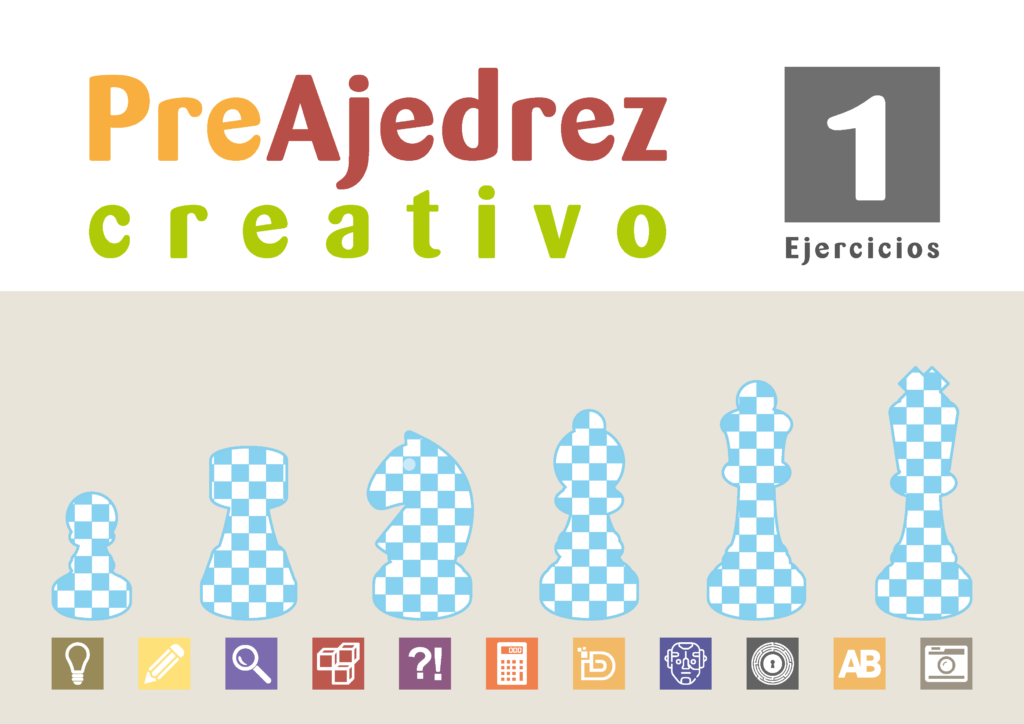
Preajedrez Creativo
Designed for children ages 3 to 5, at the preschool stage. It’s not a manual: it’s an activity book where the child gets to know the pieces through play. If you want to see what it’s like before buying it, there’s a free sample available.
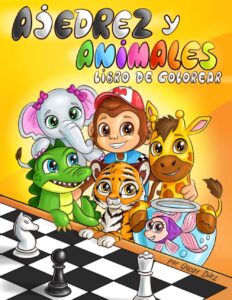
AJEDREZ y Animales – Coloring Book
Twenty-four hand-drawn illustrations where each piece is represented as an animal. The child colors, and along the way, learns to tell them apart. Simple and effective at this age.
Chess books for children ages 5 to 7
At age 5-6 you can already teach how to play chess for real. The child can follow simple instructions and remember how each piece moves. Not every child is ready at the same time, and that’s normal. What matters is not forcing it: if they show curiosity, take advantage of it.
At this age, what works are books with characters, adventures, and lots of diagrams. The more visual, the better. Here are my favorites for this age bracket:
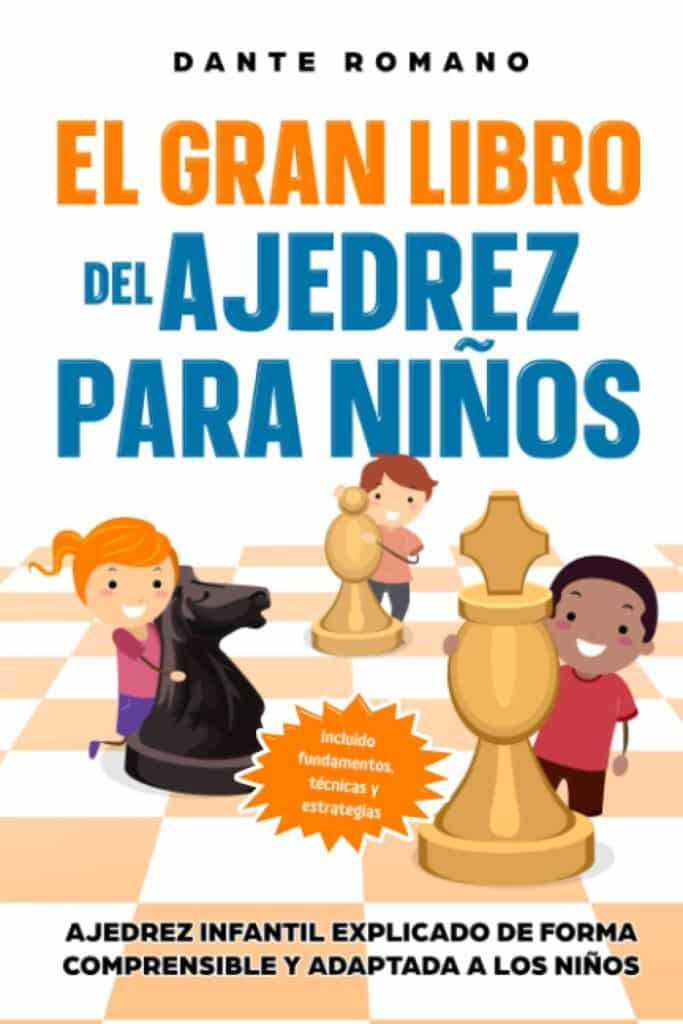
El gran libro del ajedrez para niños
Dante Romano presents the fundamentals of chess in a gradual and playful way: first the pieces, then how they move, then the first ideas about play. It’s designed for a parent or teacher to use alongside the child, not for the child to read alone.
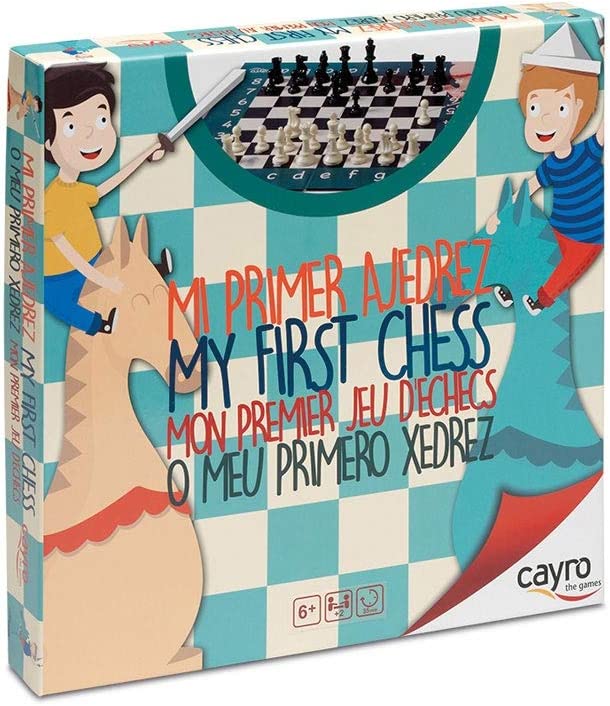
Cayro -169 My First Chess Set +6 years
More than a book, it’s an adapted board game: a large 40×40 cm board, colored plastic pieces, and a guide that explains how each piece moves. Ideal for starting to play real games without getting bogged down in too much theory. For 2 players.
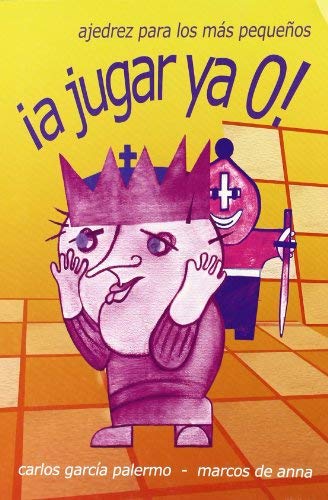
A JUGAR YA 0!
An adventure book with funny characters that teaches the starting position of each piece and how it moves. Works up to age 7. If the child can already read alone, they can move at their own pace; if not, read it with them.
Chess books for children ages 7 to 10
From age 7, many children can already understand the full rules of chess: castling, en passant capture, pawn promotion. They also start to see simple tactical patterns. Here the books can be a bit denser, with more text and more diagrams of real positions.
The goal? For the child to start thinking, not just moving.
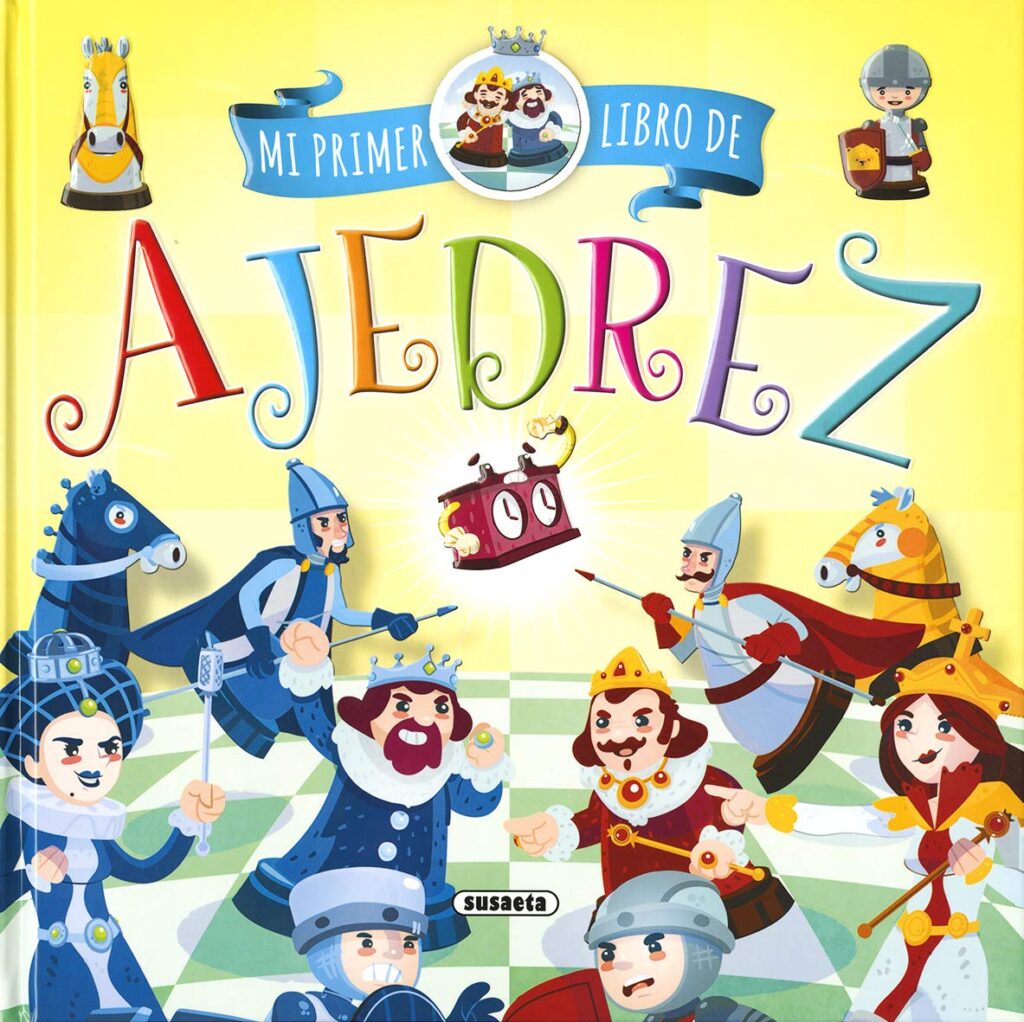
Mi primer libro de Ajedrez
Easy to understand and full of illustrations with clear examples. A good entry point for a child who already knows the pieces and wants to take the next step.
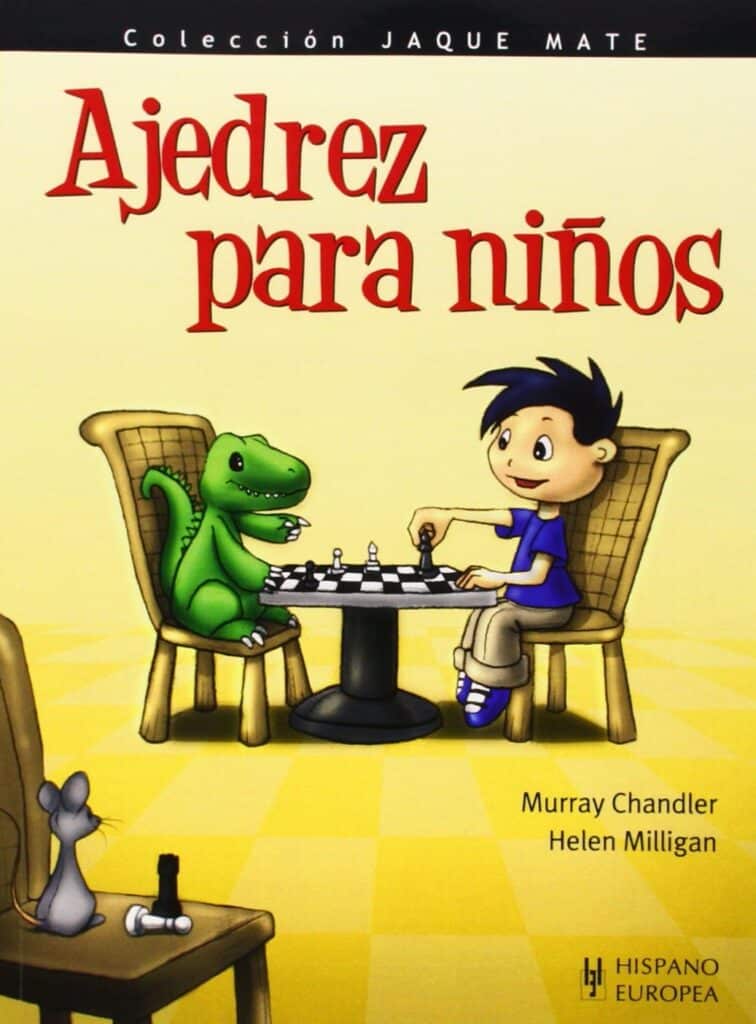
Ajedrez para niños
Murray Chandler and Helen Milligan present the basic concepts in a simple and entertaining way, with activities interspersed so the child doesn’t just read, but practices. It’s one of the most recommended books in chess academies for this age range.
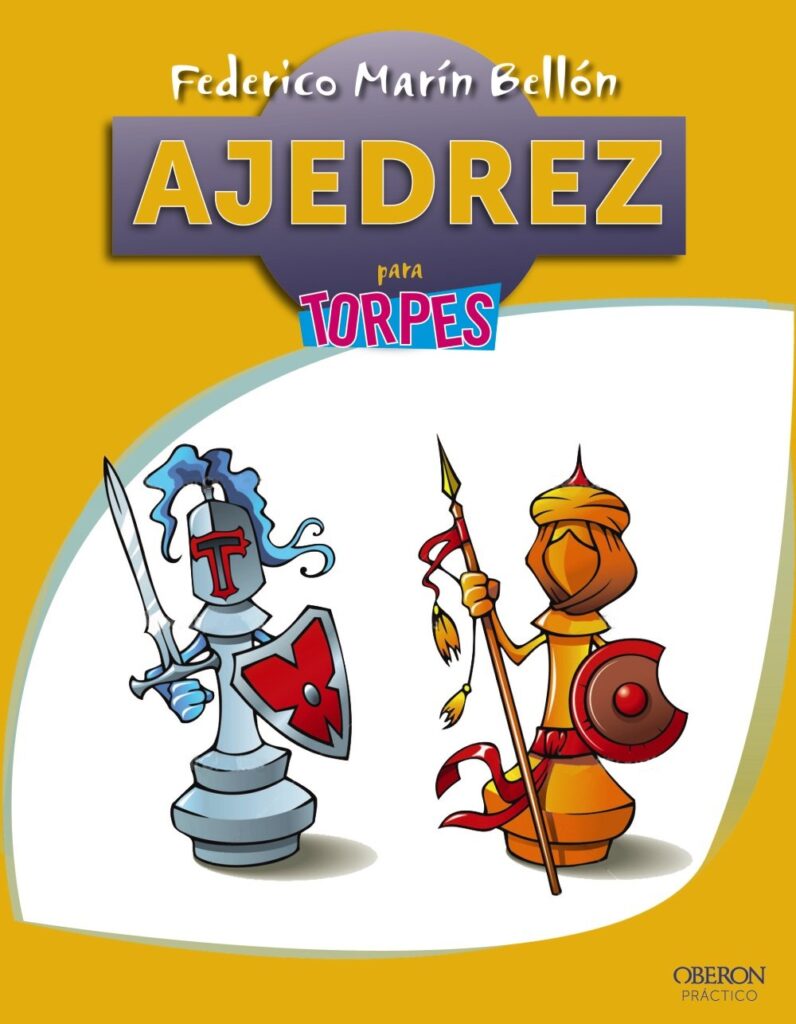
Ajedrez para torpes
Think chess is boring? Federico Marín Bellón, a journalist for the newspaper ABC, will change your mind. Full of anecdotes, stories, and lively commentary, it’s an entertaining read that covers strategy, tactics, and key moves. It also works very well for adults who want to learn alongside their kids.
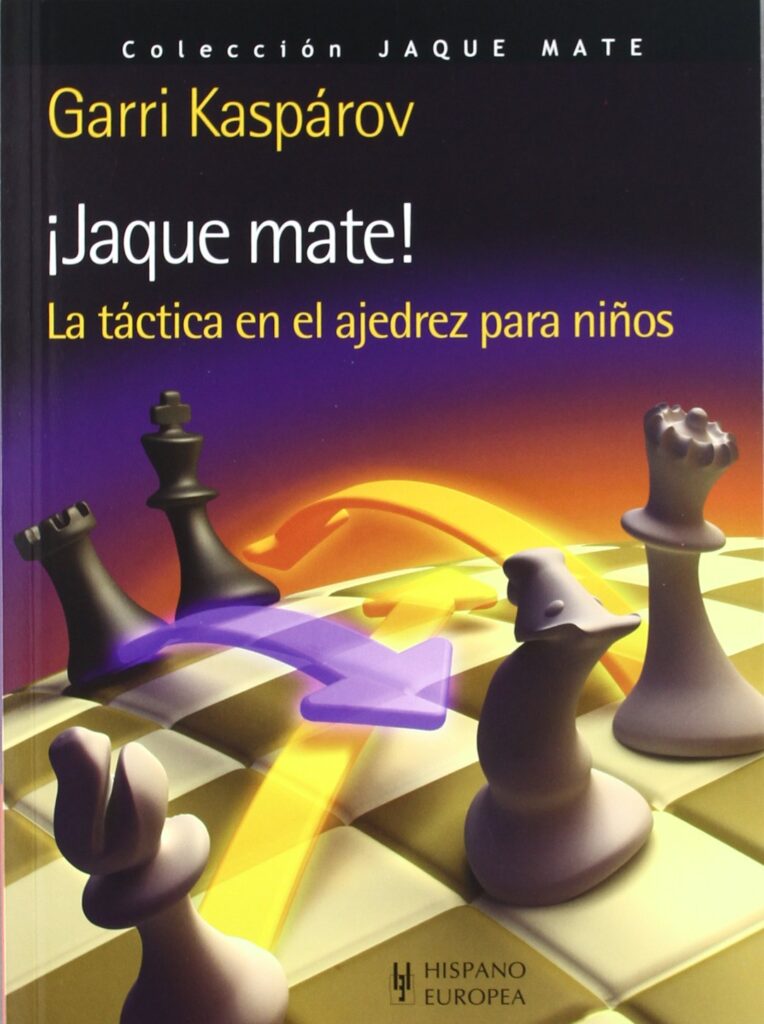
¡Jaque mate! La táctica en el ajedrez para niños
Now for tactics. This book teaches you to recognize critical positions, identify opportunities, and take advantage of them. Ideal for the child who already knows how to play and wants to start winning games consistently.
This list is a curated selection, not an exhaustive one. If you know of a book that worked especially well for your child, feel free to leave it in the comments. Together we can build a better guide.
What is the best chess book for kids?
It depends on the age and starting point. A 4-year-old needs colors and activities; a 9-year-old who already plays in tournaments needs tactics and real positions. There’s no universal book: there’s the right book for each moment.
What I will tell you: the book alone isn’t enough. Books teach you to think; real games train you. Combine both. If you want to start from scratch in a structured way, we have a free chess course that can perfectly complement any of these books.
Do chess books really help?
Yes, but only if you work through them properly. Reading them like a novel isn’t enough. The key is going to the board with every example: set up the pieces, try the variations, try to find the move before looking at the solution. Active learning is what makes the difference.
Which chess book should you start with?
Start with the one that matches the child’s age and current level. If the child doesn’t know the pieces yet, start with a visual beginner’s book. If they already know how to play full games, jump straight to a tactics book.
Preguntas frecuentes
What's the best chess book for young children (5-8 years old)?
For young children, books with lots of diagrams, colors, and characters work better than text-heavy books. 'Chess for Kids' by Murray Chandler is a popular choice for its accessibility. Methods illustrated with comics or adventures are the most effective for holding attention at that age.
From what age can a child use conventional chess books?
From around 9-10 years old, children with some grounding can use more conventional tactics books (puzzle collections organized by level). Between 11 and 13, if the child plays in tournaments, they can start with books on specific openings or classics like Tal's 'My Best Games'.
Are books or apps better for teaching chess to kids?
Apps like ChessKid (from Chess.com) are more interactive and hold children's attention better. Books are better for deep study and for building the habit of thinking without immediate visual aids. Ideally, combine both.