History and origin of chess: from India to the world
Chess has more than a thousand years of documented history. And if I tell you there are Egyptian sculptures with figures resembling the pieces we use today, you might be surprised. It’s one of the oldest games that exists, and its journey around the world is a fascinating story. Let’s take a look together.
The origin of chess
First things first: what is chess, in essence? It’s an intellectual contest between two players where luck barely counts. Whoever solves the puzzles that appear on the board better, wins. No dice. No cards. Just you and your opponent.
That said, where does it come from? The most widely accepted theory is that it was born in India, under the name chaturanga. From there it traveled to China, Russia, Persia, and Europe, where it took the shape we know today. Though I’ll tell you that recent research points to a possible Chinese origin, in the region between Uzbekistan and ancient Persia, which could date back to the third century BC. So the debate remains open.
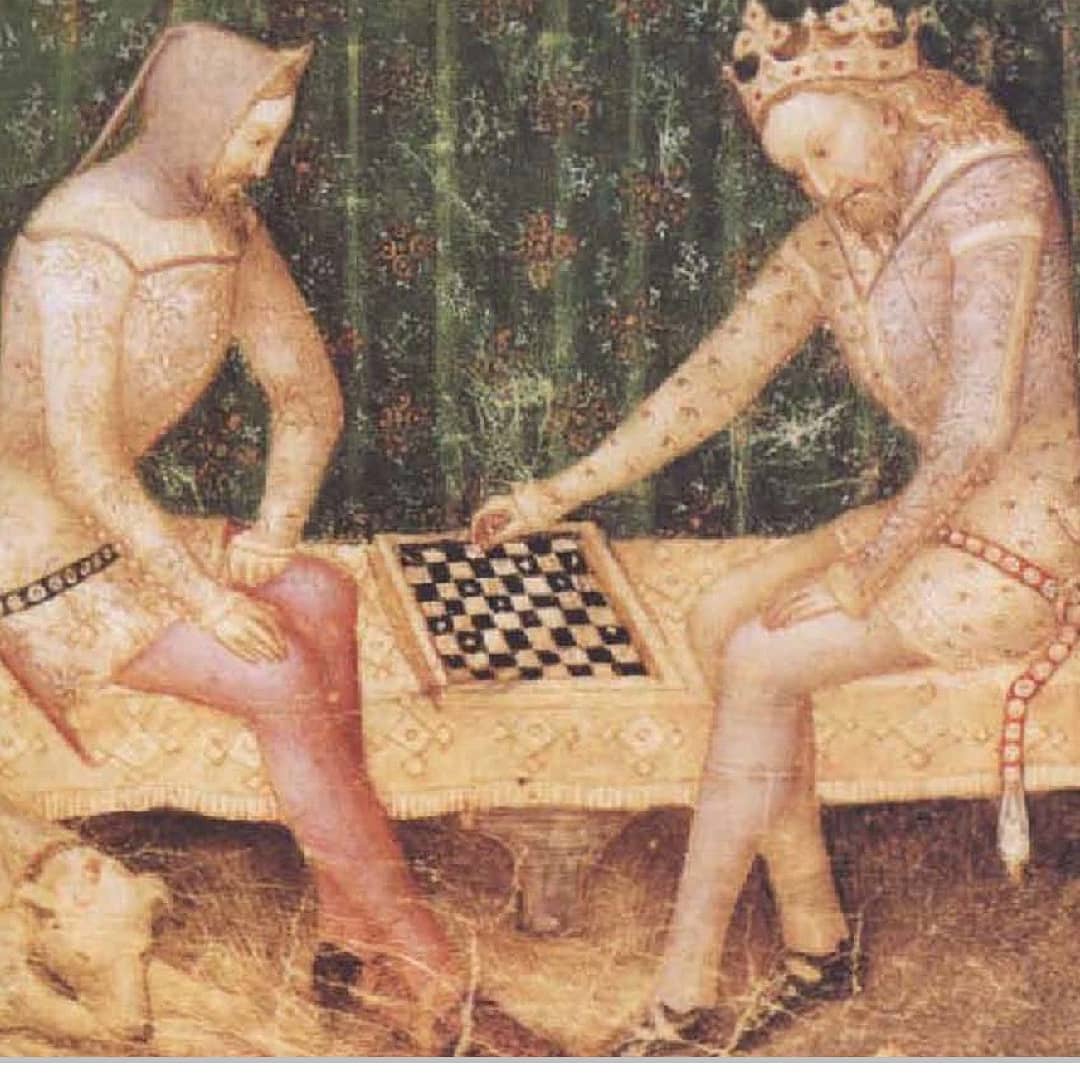
What is certain is that the game of those days wasn’t the one we know today. It has changed a great deal over the centuries. But its central idea, that “war” between two armies clashing under fixed rules, has remained intact from the start.
Who invented chess?
The truth is nobody knows for certain. Chess doesn’t have an inventor with a first and last name. People believe it emerged in India between the 4th and 5th centuries, but historical records from that era are scarce. What we do know is that the essence of the game — two sides, a king that must not fall, clear rules — has stayed the same for centuries. The forms changed, the names of the pieces changed, even some rules changed. But the underlying idea never changed.
Where does the word “chess” come from?
I’ll tell you because it’s curious. The word comes from Arabic ax-xatranch, which in turn comes from the Persian shatranj. And before all those names, the game was called chaturanga, which in Sanskrit refers to the four wings of the Indian army: elephants, chariots, cavalry, and infantry. The same pieces that remain on the board today, under other names.
The origin of each piece
Have you ever wondered why the king is called the king, or why the rook has that shape? Let’s go piece by piece.
You can find a detailed explanation of all of them in the pieces guide, but here I’ll give you the historical origin of each one.
The king takes its name from the Persian term sha, meaning “king” or “emperor.” That’s also where “checkmate” comes from: shāh māt, “the king is dead.”
The queen was originally called alferza or fiz, from the Arabic alfarza and the Persian farzin, meaning guardian. It was a weak piece. It was in Spain, in the 15th century, where it was transformed into the most powerful piece on the board, in tribute to Isabella of Castile.
The rook comes from the Persian piece rukh, which represented a war chariot. When it reached Europe, the name was first associated with “rock” and later with “fortress.” Hence its distinctive shape.
The knight represents the cavalry army and is one of the pieces that has changed the least since its origin. A knight is still a knight.
The bishop comes from the Arabic al-fil, meaning “elephant.” And that makes sense: in the armies of ancient India, elephants carried soldiers into battle. In Europe it was called “bishop,” while in Spanish the Arabic name was kept.
The pawn represents the infantry. In fact, the word “pawn” already referred to the foot soldier before chess even existed.
The fable of chess’s origin
Let me tell you a story. It’s not history in the strict sense, it’s a fable, but it’s the one that has explained for centuries why chess was invented.
Long ago, in one of the kingdoms of ancient India — in what today would be Pakistan or Afghanistan — there lived a rich and powerful king who had lost all his joy after losing a son in war. His advisors tried to cheer him up with musicians, singers, and dancers. Nothing worked.
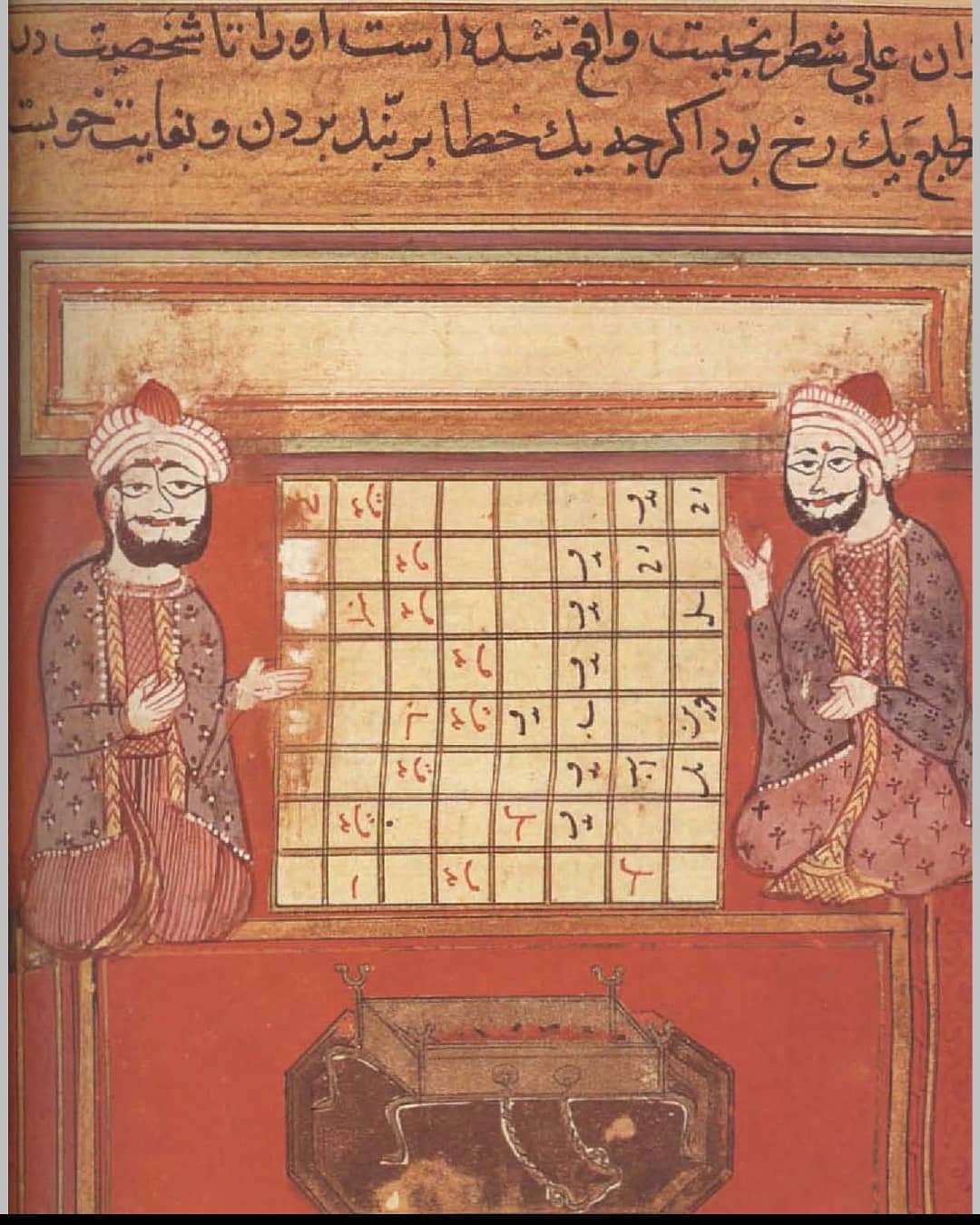
Sissa, a sage of the court, decided to create a game that would give the king back his will to live. He built a wooden board with 64 squares and 32 figurines. He explained to the king that it was a war game between two people, taught him the rules, and they sat down to play. The king was hooked. He played for hours, days, weeks, against everyone who dared to challenge him.
Grateful, the king offered Sissa whatever he wanted. After much insisting, the sage accepted and asked for something that seemed simple:
“I want one grain of wheat on the first square, two on the second, four on the third, and so on until the 64th square.”
The king thought it was a small ask. He ordered it calculated. And a few hours later his assistants came back with the answer:
= 18,446,744,073,709,551,615 grains of wheat.
Impossible to pay. The king was left speechless. Sissa had given him something far more valuable than wheat: a game that lasts forever and a math lesson the kingdom would never forget. The sage gave up the reward.
Isn’t it the perfect story for a game like this?
The history of chess in Europe
Chess reached Europe a thousand years ago, and its first great home was Spain. In feudal castles and princely courts it was played, studied, and even praised in poems. For centuries it was the game of nobility, accessible only to those with the time and education to learn it.
From Spain it spread through Italy and France, and from there to the rest of the continent.
Modern chess was born in Spain
Here’s something you might not have known. The rules we use today were born in Spain in the late 15th century. The chess brought by the Arabs was different: it had a weak piece where the queen stands today. It was the Spanish who gave that piece the most powerful movement on the board, in tribute to Isabella of Castile.
You can see all the current rules in detail if you want to go deeper.
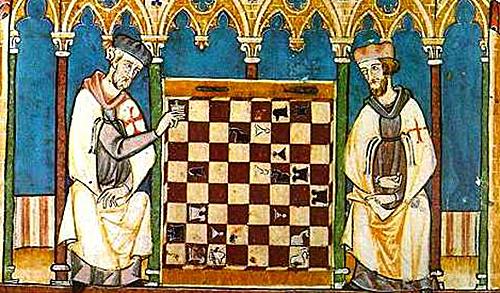
And here’s a small historical controversy I’ll tell you about. In 1495, the Valencian Francesch Vicent published the Llibre dels jochs partits dels schachs en nombre de 100, a book that could prove that modern chess was invented in Valencia. The problem is that book disappeared. Without it, the oldest surviving written reference is Lucena’s book, Repetición de amores y arte de ajedrez, printed in Salamanca in 1497. So the debate between Valencia and Salamanca remains unresolved.
From shatranj to modern chess: the full journey
Let’s summarize it because it’s important to keep clear:
- India (4th-6th century) — chaturanga is born, the game of the four divisions of the army.
- Persia — it becomes shatranj. The rules are refined.
- The Arab world — the caliphs adopt it and carry it across the Mediterranean.
- Spain (10th century) — it arrives with the Arab occupation. Here it transforms into the game we know today.
- Europe (15th-16th centuries) — it spreads through Italy, France, and the rest of the continent.
- 19th century — the first organized tournaments and the first world champions appear. Wilhelm Steinitz was the first, in 1886.
- 1924 — FIDE is founded, the International Chess Federation, which unifies the rules worldwide.
- Today — more than 600 million people play chess around the world. And the number keeps growing.
Once you know this journey, you understand why chess isn’t just a game. It’s a piece of human history that fits on a board of 64 squares.
If you want to know what chess is from scratch or discover the best players in history, you’ll find all that on the site. But if you’re already itching to play, start by getting to know the pieces and their movements. It’s the first step.
Preguntas frecuentes
Where was chess invented?
Chess was invented in India in the 6th century AD. The original game was called chaturanga and represented the four divisions of the Indian army: elephants, cavalry, war chariots, and infantry.
How did chess reach Europe?
Chess traveled from India to Persia (where it was called shatranj), from Persia to the Arabs, and from the Arabs to Spain in the 10th century during the Arab occupation of the Iberian Peninsula. From Spain it spread to the rest of Europe.
When were the modern rules of chess established?
The modern rules of chess (including the powerful queen and the pawn's first-move option) were established roughly in the 15th century in Spain and Italy. FIDE was founded in 1924 and unified the rules worldwide.
Who was the first world chess champion?
Wilhelm Steinitz was the first official world chess champion, declared in 1886 after defeating Johannes Zukertort. Steinitz introduced the modern principles of positional strategy.