
Wilhelm Steinitz: the father of positional chess
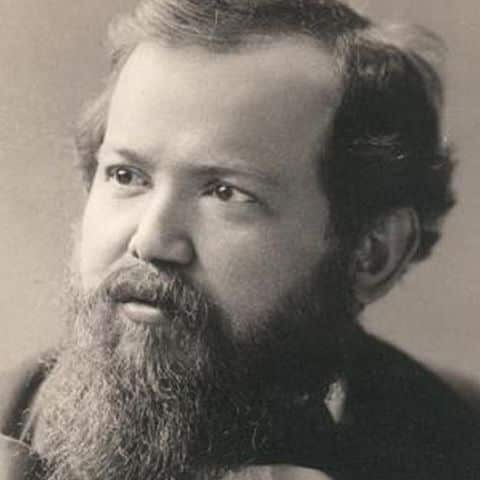
- País
- 🇦🇹 Austro-Hungarian Empire / United Kingdom / USA
- Título
- Grandmaster (GM)
- Nacimiento
- 17 May 1836, Prague (Austrian Empire, today Czech Republic)
- Fallecimiento
- 12 August 1900
- Estado
- fallecido
- ELO máximo
- 2640 · c. 1872–1880 (retroactive estimate, ChessMetrics)
- Campeón del mundo
- 1886–1894 (first official champion)
Before Wilhelm Steinitz, chess was a spectacle of brilliant attacks and risky sacrifices. After Steinitz, chess had a theory. It had principles. It had science. The first official world champion didn’t just win games; he forever changed the way players understand the game.
Who was Steinitz
He was born on 17 May 1836 in Prague, the thirteenth child of a Jewish tailor within the Austrian Empire. He learned to play young and showed immediate talent, but it was in Vienna that his game developed: he arrived in the Austrian capital in 1858, won the 1861 Vienna tournament, and was soon known as the best in Central Europe.
In 1862 he settled in London, where he’d develop the first phase of his career. English chess was vibrant — with great figures like Howard Staunton — and Steinitz earned a reputation as a brilliant attacker, in line with the Romantic style of the era. But quietly, he was beginning to develop completely different ideas.
The silent revolution
Starting in the second half of the 1870s, Steinitz’s game changed visibly. He stopped seeking attack for attack’s sake. He began accumulating small advantages, actively defending seemingly inferior positions, maneuvering his pieces to optimal squares before launching any offensive. His contemporaries didn’t understand it; many thought he had become weaker.
In reality, he was articulating what he himself would call modern positional theory:
- Advantages aren’t created from nothing; they accumulate piece by piece, pawn by pawn.
- Attacking without a positional basis leads to failure; first create the advantage, then convert it.
- The king isn’t just a piece in danger; it can be active in closed positions.
- Defense isn’t passivity: it’s active resistance that prepares the counterattack.
These ideas, so obvious today that they appear in any basic manual, were revolutionary in 1880.
The first World Championship (1886)
In 1886, Steinitz played in the United States the first match with the World Champion title at stake. His rival was German player Johannes Zukertort, considered the best player in the world alongside him. The result was Steinitz 12.5 – Zukertort 7.5. At 49, Steinitz was the official world champion.
For eight years he held the title, defending it against the best challengers of the era: Mikhail Chigorin (1889 and 1892) and Isidor Gunsberg (1891). In all those matches, Steinitz’s positional depth was decisive.
The defeat and the decline
In 1894, at 57, Steinitz gave up the title to Emanuel Lasker, a 25-year-old who combined Steinitz’s positional soundness with superior psychological ability. The match (10-5 in Lasker’s favor) was clear, though Steinitz attempted a rematch in 1897 that he also lost (12.5-4.5).
His final years were difficult. In 1900 he was admitted to the Manhattan State Hospital with severe mental health problems. He died on 12 August of that year, at 64, without the financial means a man who had transformed a sport deserved.
His chess DNA
In our chess DNA system, Steinitz represents the soundness and positional technique profile: extreme soundness, exceptional technical mastery, and the consistency of a player who doesn’t make mistakes voluntarily. If your GM twin is Steinitz, your strength lies in strategic understanding and the patient accumulation of advantages; your biggest challenge may be sharp tactical play where intuition matters more than method.
Keep exploring
- Emanuel Lasker, who took the title from him and built on his ideas
- Mikhail Botvinnik, heir to the scientific tradition Steinitz inaugurated
- José Raúl Capablanca, the culmination of the classical positional era
- World chess champions
- All players
Preguntas frecuentes
Why is Steinitz the first 'official' world champion if strong players existed before?
Because the 1886 World Championship was the first match where both players explicitly agreed the winner would be recognized as world champion. Before that, world supremacy was a matter of reputation and tournament results. The 1886 Steinitz-Zukertort match, played between New York, St. Louis, and New Orleans, established the rules of the modern championship: the champion defends the title against the strongest challenger, and the match winner holds the title.
What is Steinitz's 'positional theory' about?
Before Steinitz, Romantic-era chess dictated that you must always attack, sacrifice material to create threats, and force mate. Steinitz showed chess doesn't work that way: advantages accumulate step by step (a weak square, a doubled pawn, an open file), and a king in the center can be a fortress if the position is closed. Active defense isn't shameful; it's correct. His ideas seemed heretical in his time but are the basis of all modern chess.
Why did Steinitz die in poverty?
Despite being the best player in the world for decades, Steinitz lived off modest tournament fees and newspaper chess columns. After losing the title to Lasker (1894), he kept competing but no longer had the same power. His final years in New York were marked by financial hardship, worsened by mental health problems. He died in August 1900 at the Manhattan State Hospital, without a fortune, but with the most influential intellectual legacy in the history of chess.