
Open chess openings (1.e4 e5)
Open openings are the ones that start with 1.e4 e5. Both sides occupy the center from the first move, pieces find free lines, and the game becomes active right away.
Why does knowing this matter? Because choosing your opening well puts you at an advantage before the real fight even begins.
What is an open opening?
Since the rules of modern chess were born at the end of the 15th century, players have spent centuries debating how to start a game. Thousands of variations have been explored and, even today, with artificial intelligence in the mix, new ideas keep appearing.
Some openings come and go with fashion. Others have been there from the start and nobody has been able to refute them.
The move 1.e4 is the most played in history. The oldest known modern chess game, recorded in a 1475 poem, already starts with 1.e4. If Black replies 1…e5, we enter fully into open openings.
What’s special about that reply? Black doesn’t give up the center: they share it. From there, bishops gain a lot of strength because the diagonals are cleared, and the tactical fight starts almost from move two.
Let’s look at the main open openings and how to play them.
What are the open openings?
Here are the most important ones. The ones with a link take you to the full guide with variations and examples:
Italian Game
The Italian Game is the most recommendable if you’re just starting out. The moves are logical and intuitive: you develop pieces, control the center and prepare to castle. Everything fits together naturally.
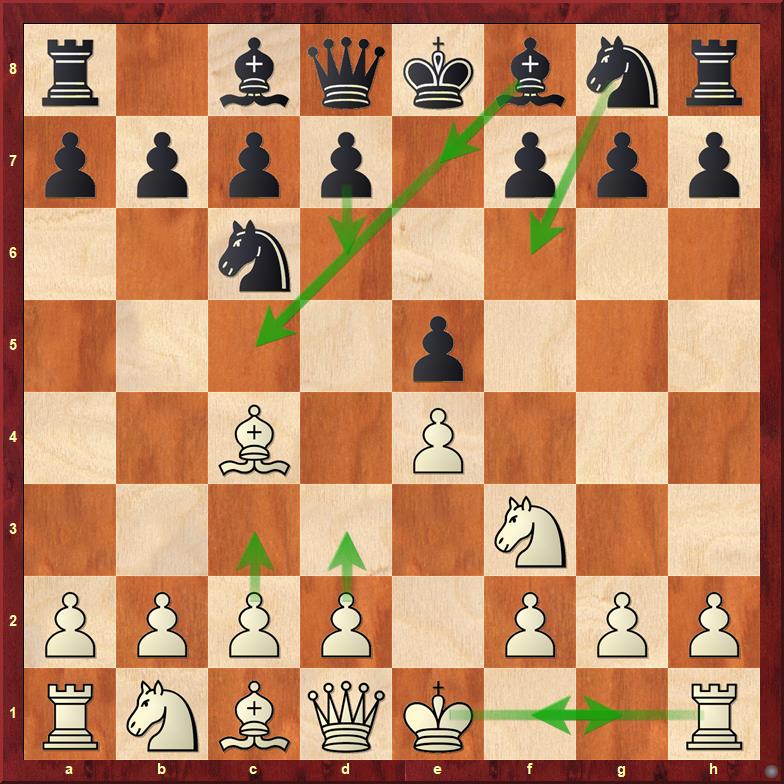
It’s perfect for understanding opening principles without getting lost in complicated variations. Once you master the basic ideas, you can explore gambits and traps later on.
Spanish Opening
The Spanish Opening, also called the Ruy Lopez Opening, is named after a 16th-century Spanish priest who wrote about it in 1561. It’s one of the oldest openings and, at the same time, one of the favorites of today’s grandmasters.
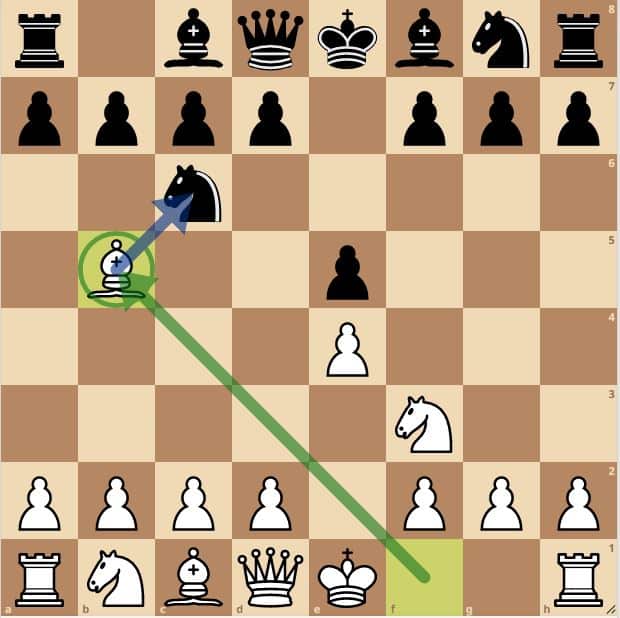
1.e4 e5 2. Nf3 Nc6 3. Bb5
The bishop on b5 presses the knight that defends the e5 pawn. The idea is subtle but very effective. That’s why the Ruy Lopez never goes out of style.
The Italian and the Spanish are the two most played open openings in the world. But they’re not the only ones. Here’s the complete list of open openings:
- King’s Gambit
- Center Game
- Parham Attack
- Portuguese Opening
- Vienna Game
- Alapin Opening
- Napoleon Opening
- Petrov Defense
- Philidor Defense
- Elephant Gambit
- Latvian Gambit
- Greco Defense
- Damiano Defense
- Scotch Gambit
- Ponziani Opening
We’ll keep expanding this list. In the meantime, if you want to explore more options you can see all chess openings.
Analiza partidas de esta apertura
Pega cualquier PGN para reproducir y estudiar partidas paso a paso. Encuentralas en Lichess o Chess.com.
Preguntas frecuentes
What are open openings?
Open openings begin with 1.e4 e5. Both sides occupy the center and tactical play arises quickly. They include the Ruy Lopez, Italian, King's Gambit and Petrov Defense.
What's the best open opening for beginners?
The Italian Game (1.e4 e5 2.Nf3 Nc6 3.Bc4) is the most recommended for beginners for its simplicity and logic. The Ruy Lopez (3.Bb5) is more complex but very solid.
What is the Ruy Lopez?
The Ruy Lopez (also called the Spanish Opening) starts with 1.e4 e5 2.Nf3 Nc6 3.Bb5. The bishop on b5 presses the knight that defends the e5 pawn. It's the most popular opening at the top level.