
The Trapped Piece in Chess: when there's no way out
The trapped piece is one of the most painful situations in chess: you have a highly valuable piece on the board but it can’t go anywhere. The opponent surrounds it, attacks it with cheap pieces, and you can’t do anything. Losing material without having made a visible mistake is the essence of this tactic.
The trapped piece isn’t just bad luck. It almost always comes from having taken a piece too deep into enemy territory without securing its retreat.
What makes a piece get trapped?
A piece is trapped when both of these conditions occur at the same time:
- It has no free squares — every square it could move to is controlled by enemy pieces or blocked by its own pieces.
- It’s being attacked — the opponent threatens it with a lower-value piece that can capture it while winning material.
When both happen at once, the piece is doomed.
The queen trap: the most frequent case
The queen is the most powerful piece on the board, but also the one that gets trapped most easily if it ventures out unsupported. Look at this example:
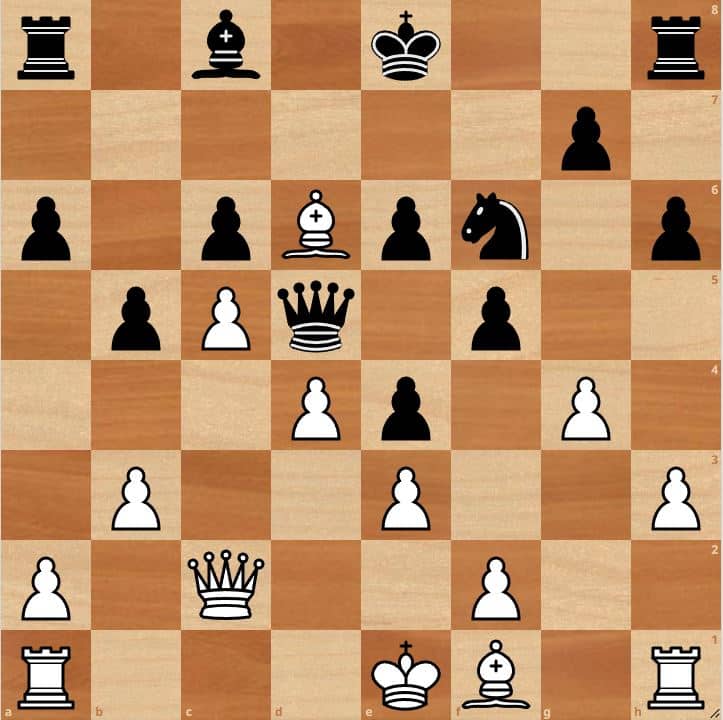
The black queen is surrounded by pieces. It has very little mobility. White is going to capitalize on this with a sacrifice that closes off its last exits:
1. Bc4!
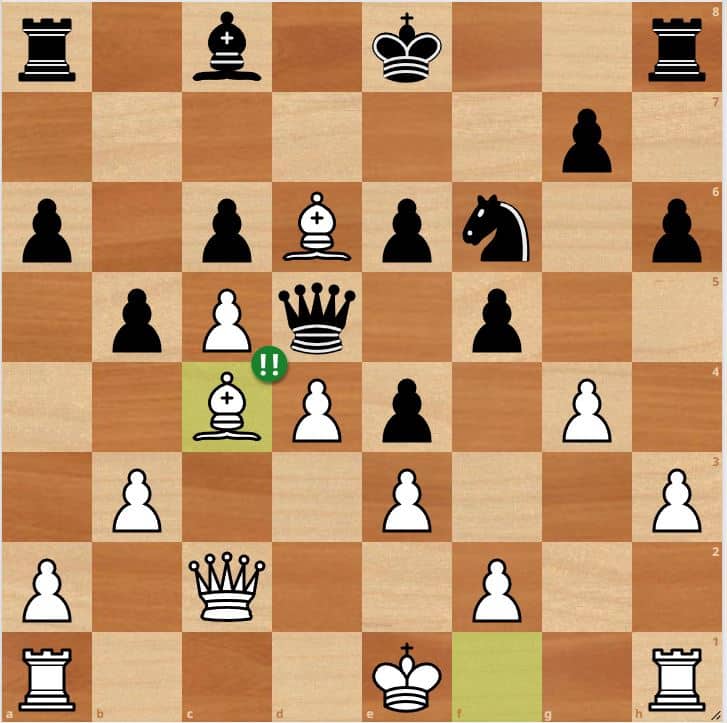
Black takes the bishop: 1… bxc4. There’s no other viable option. But now:
2. bxc4
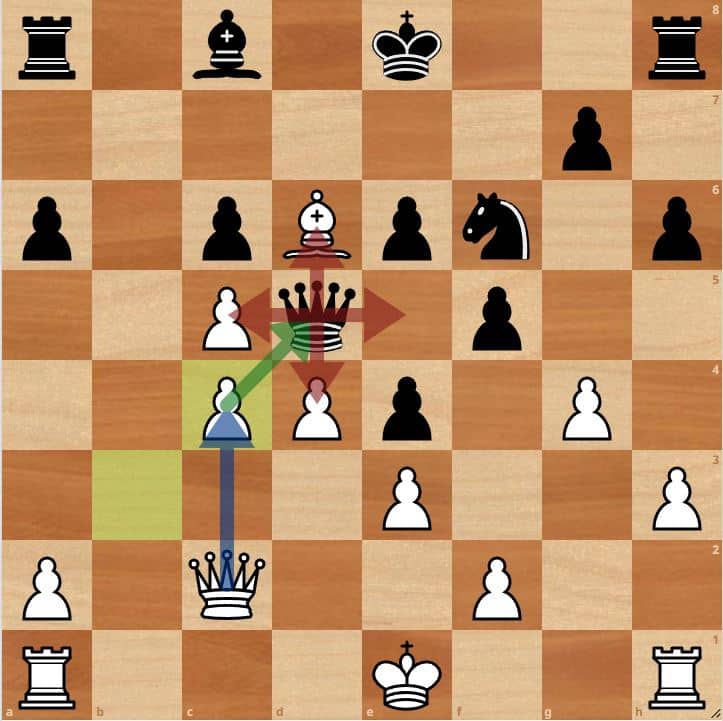
The queen has no moves. It’s completely surrounded and will have to capture the sacrificed bishop, losing the queen for the bishop. White wins a piece of enormous value.
Why this pattern works
The key is that the bishop sacrifice closes the last escape square of the queen. Before 1. Bc4, the queen could try to escape through some route. After the pawn exchange on c4, that route disappears and the queen ends up completely boxed in.
It’s a two-move trap, but very hard to see if you’re not specifically checking whether the queen has exits.
The pieces that get trapped most
The adventurous queen
The queen is the most frequently trapped piece because players send it into the attack too early. In the opening, taking the queen into enemy territory might look aggressive but often ends in a loss of tempo or of the queen itself if the opponent surrounds it with minor pieces.
Practical rule: before moving your queen to a square, make sure it has at least two escape squares.
The trapped bishop
The bishop only moves on one color. If the opponent controls all the squares of that color in the area where the bishop is, it gets trapped with no way out. This is especially common in the corners of the board.
The knight on the rim
A knight on a1, h1, a8, or h8 has only 2 possible moves. If the opponent controls them, the knight is trapped. That’s why they say “a knight on the rim is dim” (about to be lost).
How to spot whether you can trap a piece
Before every move, ask yourself these questions about the opponent’s pieces:
- Does this piece have escape squares if I attack it?
- Can I attack it with a lower-value piece?
- Can I close off its escapes with a pawn or a sacrifice?
If the answer to all three is yes, you have a trapped piece waiting to be captured.
How to avoid getting your pieces trapped
- Don’t go in without securing your way out — before moving a piece into enemy territory, verify it has at least two squares to return to.
- Count the escape squares — if your queen or bishop only has one square to go to, it’s time to retreat it before the opponent surrounds it.
- Be suspicious of sacrifices that “win material” — sometimes the opponent offers material so that your piece goes to a square with no escape. Always calculate.
Related tactics: The Decoy · The Pin · The Fork
Preguntas frecuentes
What is a trapped piece in chess?
A trapped piece is one that has no legal squares to move to without being captured by a lower-value piece. It's often captured directly or can be won with a sacrifice that closes off its last escape routes.
Which pieces get trapped most often?
The queen and the bishop are the pieces most frequently trapped. The queen, because the opponent can surround it with minor pieces worth less. The bishop, because since it moves on only one color, its escape squares shrink quickly if the opponent controls them.
How do you create a trapped piece?
You surround the piece with your own pieces or pawns controlling all its escape squares, then attack it with a lower-value piece. If it can't capture without further losses or escape, it's trapped.
How do you avoid getting your pieces trapped?
Always keep escape squares for your active pieces, especially for the queen and bishops when they venture deep into enemy territory. If you see one of your pieces has few available squares, it's time to retreat it before the opponent surrounds it.