
The outpost in chess: your knight's dream square
The knight is an odd piece: clumsy and slow at a distance, but planted in the right spot it becomes a monster no one can move. That spot has a name: outpost. If you’ve never heard the term before, today you’re going to master it.
What an outpost is (and why it’s called that)
Outpost is an English word. In Spanish you’ll also see it as casilla avanzada or casilla de apoyo. They’re all the same thing:
A square in enemy territory (usually on the 5th or 6th rank), protected by one of your pawns, that no enemy pawn can attack.
That last condition is the key. An outpost is nothing more than a weak square of the opponent’s that you can occupy and support. Since no enemy pawn remains capable of kicking you out, the piece you place there stays… and rules.
Why it’s a knight’s dream
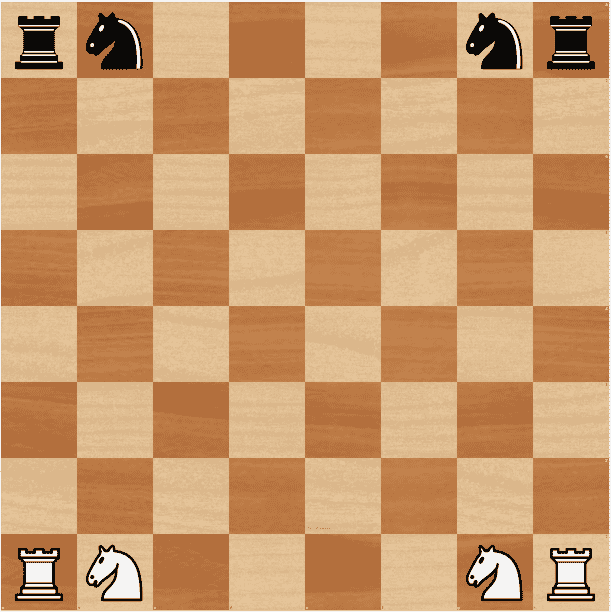
Look at the knights at the start of the game: they’re born stuck to the edge, where they control very few squares. Their mission is to reach the center, and there’s no better destination than an outpost.
Why the knight and not another piece? Because the knight is short-range: it needs to be close to the fight to perform. A knight on a central outpost (say, d5 or e5) controls a ton of squares, attacks enemy territory, and above all can’t be kicked out by a pawn. To remove it, the opponent has to give up a piece of equal or greater value… and often that’s simply not worth it.
A rook or a bishop also enjoy an outpost, but the knight is the one that benefits most: it’s the piece that gains the most from settling on a good post.
How to create and occupy an outpost
Here’s the plan:
- Find the weak square. Look at the opponent’s pawns: which advanced square have they left with no possible defense?
- Make sure you can support it. You need one of your own pawns to protect your knight once it arrives.
- Bring the knight over with a maneuver. Knights rarely arrive in one jump; they usually need two or three moves to make the trip (for example, going around to enter through the good square).
And as always: watch out for the reverse. Don’t push your pawns recklessly, because every advance can hand the opponent an outpost for their own knight in your territory.
The underlying idea
The outpost is where two ideas you already know meet: weak squares and piece activity. Spotting one and planting your knight there is one of the most satisfying maneuvers in chess.
Once you learn to see outposts, you’ll look at every game searching for where to plant your knight. And a well-planted knight in the center is worth almost as much as a rook.
Useful links
Preguntas frecuentes
What is an outpost in chess?
An outpost (also called an advanced square) is a square in enemy territory, usually on the fifth or sixth rank, protected by one of your pawns and unreachable by any enemy pawn. It's the best spot to place a knight.
Why is the knight the ideal piece for an outpost?
Because the knight isn't a long-range piece: it performs much better close to the action. Planted on a central outpost, it controls many squares, can't be kicked out by a pawn, and forces the opponent to spend a piece to trade it off.
How do you get an outpost?
First you spot a weak square in enemy territory (one their pawns can no longer defend). Then you maneuver your knight there and support it with one of your own pawns. From there, that piece dominates the area.