
Pawn promotion in chess: rules and strategy
Did you know a humble pawn can become the most powerful piece on the board? That’s exactly what happens with promotion. When your pawn reaches the last rank — rank 8 if you’re playing White, rank 1 if you’re playing Black — it doesn’t just sit there. Right at that moment, you must choose a new piece and place it on that square.
You can turn it into a queen, rook, bishop, or knight. The king and the pawn itself are excluded. That’s it: four options, and you decide.
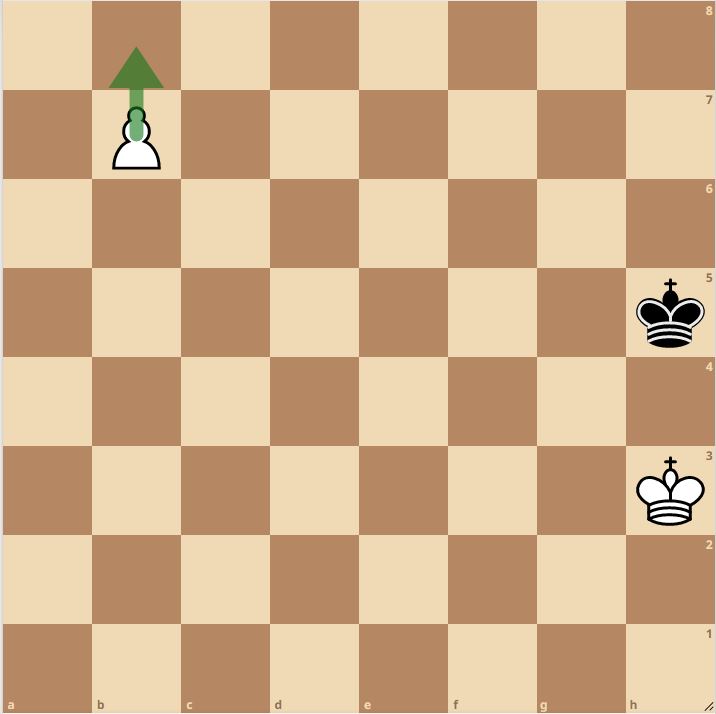
Which piece do you turn the pawn into?
The usual answer is the queen. It’s the most powerful piece on the board and in the vast majority of positions it’s the correct choice. If you no longer have your queen in the game, no problem: you can have two queens at once. It’s completely legal, though in an over-the-board game you’ll have to improvise — usually flipping a spare rook upside down to represent the second queen.
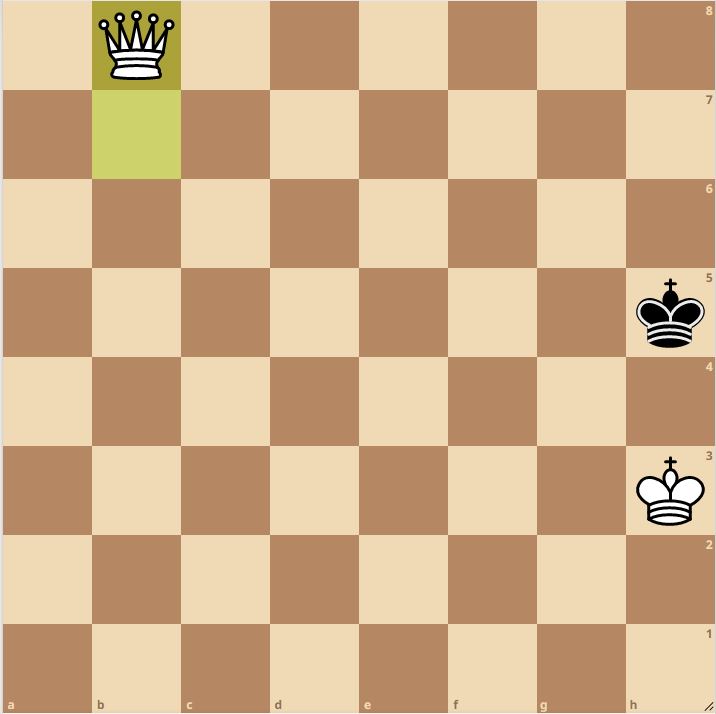
But there are cases where promoting to a queen would be a mistake. Let’s see why.
Underpromotion: when the queen isn’t the best option
Imagine you promote to a queen and, in doing so, stalemate the enemy king. Stalemate is a draw, so your overwhelming advantage turns into a draw. To avoid it, sometimes you have to choose a piece weaker than the queen. That’s called underpromotion.
The most frequent case is promoting to a knight. The knight jumps in a unique way and can deliver immediate check from a square the queen couldn’t reach in a single move. It’s a tactical surprise that shows up in very specific endgames.
When do you promote to a rook or bishop? Very rare, but it happens. In practice, if you see that the queen would give stalemate, try the knight first, then the rook.
Practice pawn promotion
The best way to understand this rule is to experience it yourself on the board. When the pawn reaches the last rank, the move isn’t finished until you choose the new piece. In the position below you have a pawn on a7 and the black king cornered. Push it to a8 and turn it into a queen:
You play White. Push the pawn from a7 to a8 to turn it into a queen. Promotion is part of the move: leaving the pawn on the last rank without transforming it doesn't count.
See that? Promotion is part of the move, not a separate step. As soon as the pawn touches the last rank, it transforms.
Over-the-board rules: how to promote in a tournament
If you play in an in-person tournament, there’s a technical rule you should know to avoid illegal moves. According to FIDE’s official rules, you must do everything with the same hand:
- Remove the pawn from the board.
- Place the chosen piece on the promotion square.
- Press the clock.
A valid alternative is to place the new piece directly on the square without moving the pawn first, but the essential rule remains the same: one hand for the whole operation. If you use both hands, the arbiter can penalize you.
Once you master this rule alongside en passant and castling, you’ll know every special move in chess. That’s a big step.
Preguntas frecuentes
What is pawn promotion?
Promotion happens when a pawn reaches the board's last rank (rank 8 for White, rank 1 for Black). The pawn must turn into a queen, rook, bishop, or knight. It can't stay a pawn.
Which piece does the pawn turn into on promotion?
Usually the queen is chosen, since it's the most powerful piece. However, in some cases a knight is chosen (underpromotion) to give immediate check or to avoid stalemating the opponent.
What is underpromotion?
Underpromotion is choosing a piece weaker than the queen when promoting a pawn. The most common case is choosing a knight to deliver an unexpected checking jump or to avoid stalemating the enemy king while still winning.
Can I have two queens on the board?
Yes. If I promote a pawn to a queen, I have two queens (the original plus the new one). It's completely legal and a big advantage.