
Greek Gift in Chess: the bishop sacrifice on h7
Have you ever been given a gift that was actually a trap? That’s exactly what the Greek gift in chess is, also known as the “Greek sacrifice.” The name comes from the famous Trojan Horse: the Greeks gave Troy a giant wooden horse hiding soldiers inside. The city accepted it… and lost the war that very night.
On the board, the idea is the same. You offer the bishop on h7 as if it were a gift, the opponent accepts thinking they’ve won material, and you launch an unstoppable attack. The opponent receives a gift that destroys their position.
Let’s see how it works and when you can execute it.
Typical Greek gift position
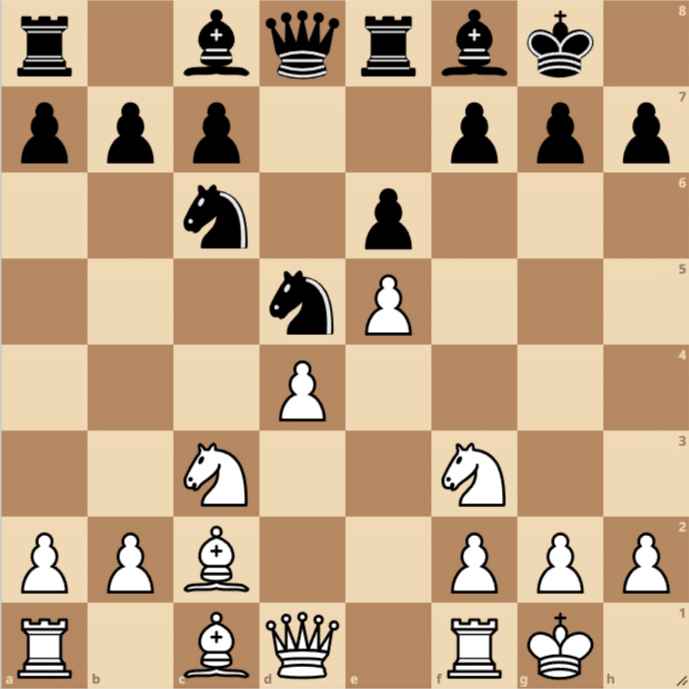
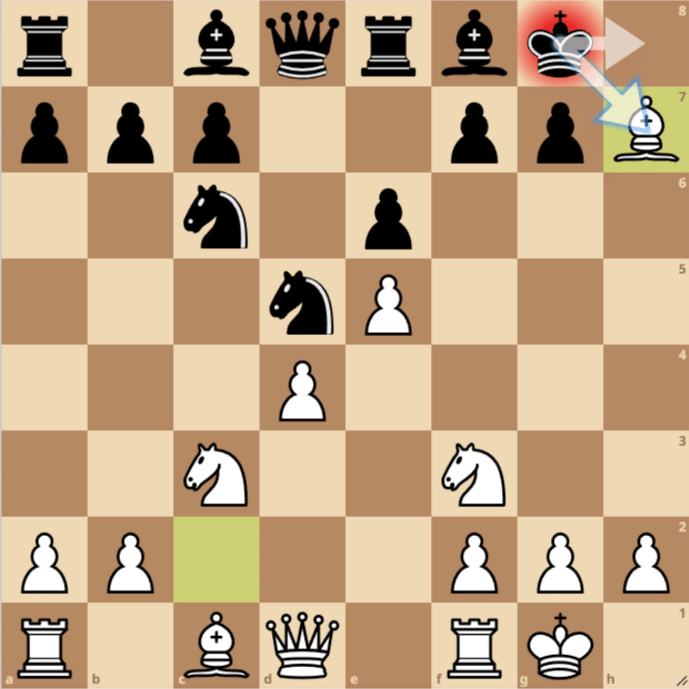
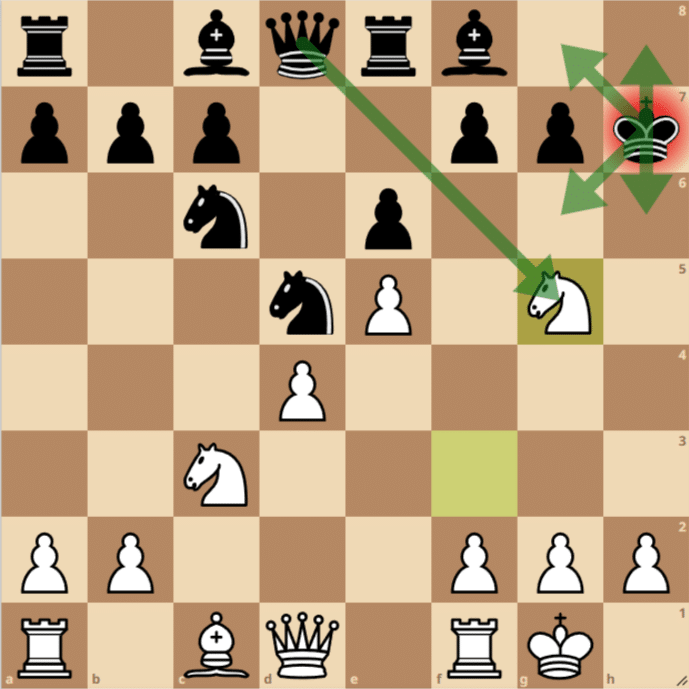
The basic sequence is this:
- Bxh7+ — the bishop lands on h7 with check, forcing the king out.
- Kxh7 — the opponent accepts the “gift” and captures.
- Ng5+ — the knight enters on g5 with check. Now the queen has a clear path to join the attack.
What if the opponent declines the bishop and doesn’t capture on h7? Then the knight and queen coordinate anyway to deliver checkmate or win decisive material. The sacrifice works either way.
The 5 black responses — and why they all lose
Here’s the interesting part. Let’s look at the five outs Black has after Kxh7 Ng5+, and I’ll show you why none of them saves the game.
1. Kg8 — the worst of all
The king escapes to g8. It’s a grave error. White responds:
- Qh5+ Kg8
- Qh7# — checkmate.
Extremely fast. The king ends up trapped with no defense possible.
2. Kh6 — the king flees sideways
The king tries to escape via h6. But the attack keeps its force:
- Nxf7+ Kh7
- Nxd8 — White captures the enemy queen and ends up with a decisive advantage.
A sacrifice that pays itself back with a piece and leaves you winning. Not bad at all.
3. Kg8 — the king comes home
The king returns to g8. It looks safer, but the pressure doesn’t disappear:
- Qh5 — the queen threatens direct checkmate.
The only defense that gives Black some life is trying to sacrifice the queen or play Bb4. But after Qxf7+ Kh7 Qh5+ Kg8 Qh7+ Kf8 Qh8+ the king only has e7, and after Qxg7 it’s checkmate. Black ends up cornered either way.
4. Kg6 — the king tries to escape toward the center
The king goes to g6, looking for space. Here comes a key check:
- Qd3+
Now Black has three possible responses:
- If they play f5, White captures en passant and the queen enters on f3 with check. It then heads to f7, and with a chain of checks ends up delivering checkmate on h7.
- If the king goes to h5 or h6, the story is the same: the queen enters via the h-file with several checks and mate is unavoidable.
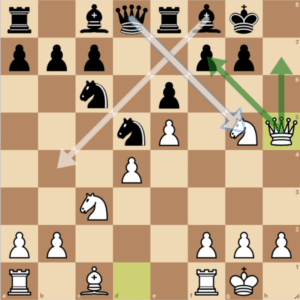
5. Qxg5 — sacrificing the queen
The last option is to capture the knight on g5 with the queen. Black hands over their most powerful piece just to slow down the attack. A sign of just how desperate their position is.
A tactic you have to know
Notice the power of this pattern: in all the variations, White achieves checkmate or wins decisive material. There’s no perfect defense for Black once they accept the gift.
The Greek gift is one of the best-known tactics in competitive chess precisely because of this: when the conditions are met, the result is nearly inevitable. Once you understand it and train it, you’ll recognize it in your own games and know exactly when to launch it.
Preguntas frecuentes
What is the Greek gift in chess?
The Greek gift (or Greek sacrifice) is the bishop sacrifice on h7 (Bxh7+), forcing the black king to capture. After Kxh7, the knight jumps to g5 with check and the queen activates to create an unstoppable attack. It's named after the Trojan Horse: a gift that hides a trap.
When does the Greek gift work?
The Bxh7+ sacrifice works when these conditions are met: the black king is on g8 without having castled queenside, the white knight can reach g5 (from f3 or e2), and the white queen has access to the diagonal or to h5 to support the attack. If any condition is missing, the sacrifice may be incorrect.
How do you defend against the Greek gift?
The main defense is Kg8 instead of capturing the bishop: the king doesn't take the 'gift.' You can also defend with Nf6 to block the knight's advance to g5. If the king already captured (Kxh7), the most solid defense is Kg8 after the knight check on g5, although the position is complicated.