
Quick checkmate: the fastest mates in chess
Did you know a chess game can end in just two moves? It’s not a magic trick: it’s the result of neglecting the king in the opening moves. The sooner you know the most common quick mates, the sooner you’ll stop falling for them and start using them yourself.
Let’s go through them one by one.
1. Scholar’s Mate
The idea is simple: a queen supported by a bishop aims directly at f7, which at the start of the game is only defended by Black’s king. If Black doesn’t react in time, checkmate arrives in four moves.
Why does it work? Because it punishes the mistake of not developing pieces and not watching the opponent’s early queen threats.
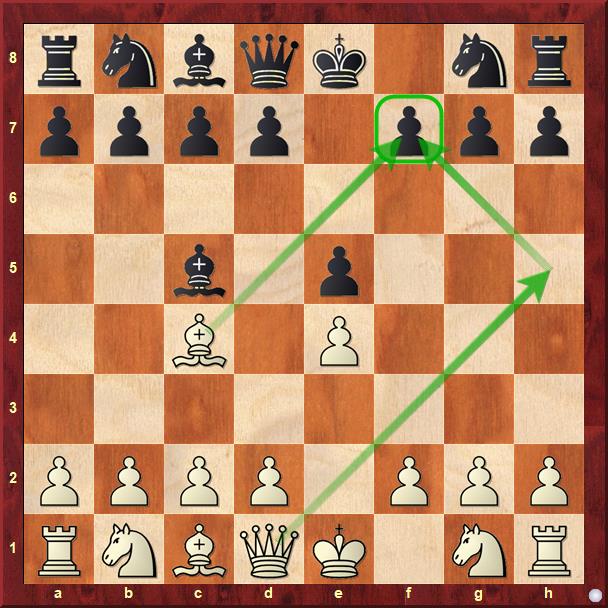
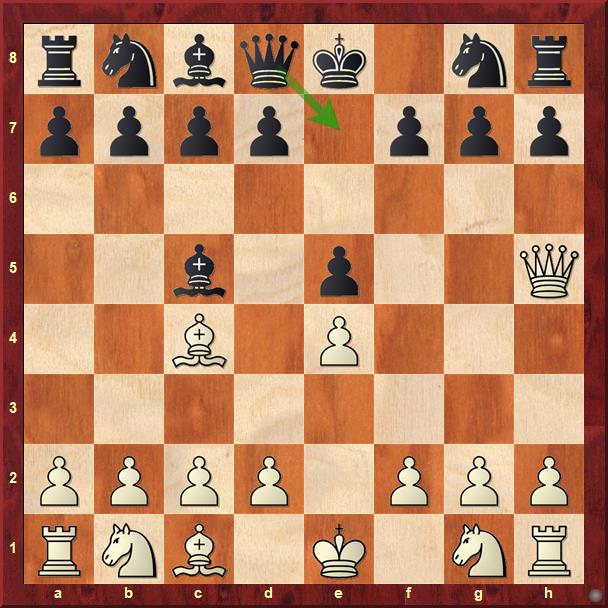
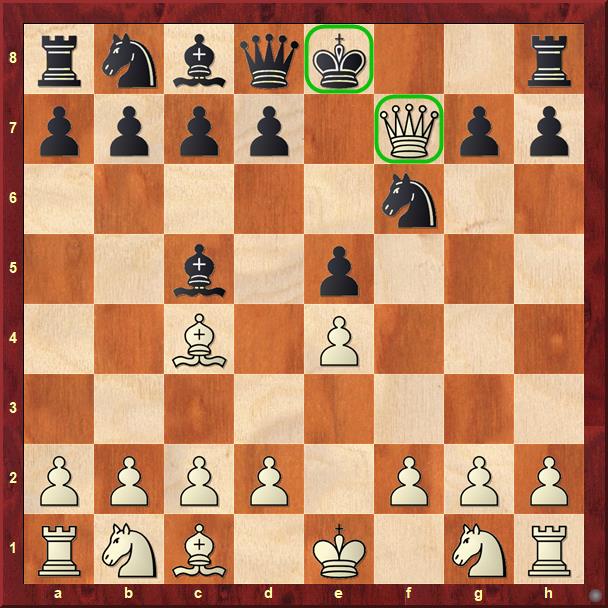
If you want to go deeper, here’s Scholar’s Mate step by step.
2. Fool’s Mate (White)
Fool’s Mate is the fastest possible checkmate for White: it happens in just two moves. How is that possible? White moves the f2 pawn and then the g4 pawn, leaving the h4-e1 diagonal completely open. Black’s queen enters on h4 and delivers mate.
You rarely see it after the first few games, but understanding why it happens teaches you something very valuable: don’t move pawns in front of your castled king without a clear reason.
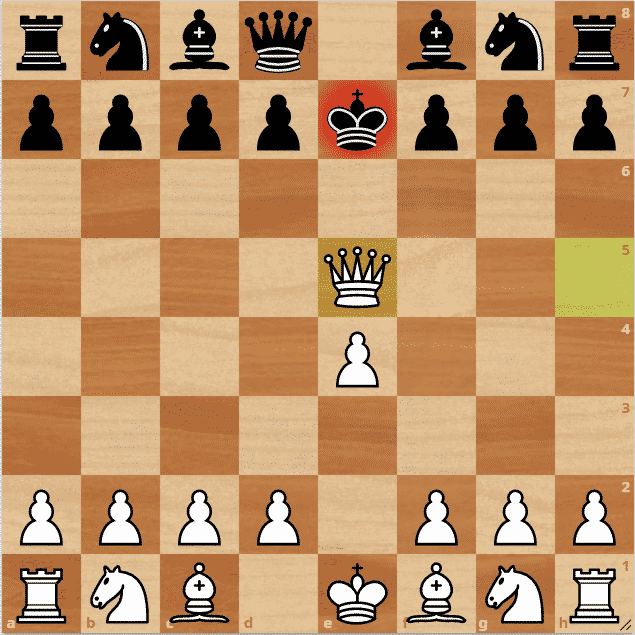
Here’s Fool’s Mate step by step.
3. Fool’s Mate (Black)
This mirror version follows the same idea, but from Black’s side. Black opens the h4-e1 diagonal with the same pawn mistakes, and White gives checkmate in two moves with the queen on h5.
Notice: both mates share the same pattern. Leaving a diagonal open toward the king is always dangerous, no matter which color you’re playing.
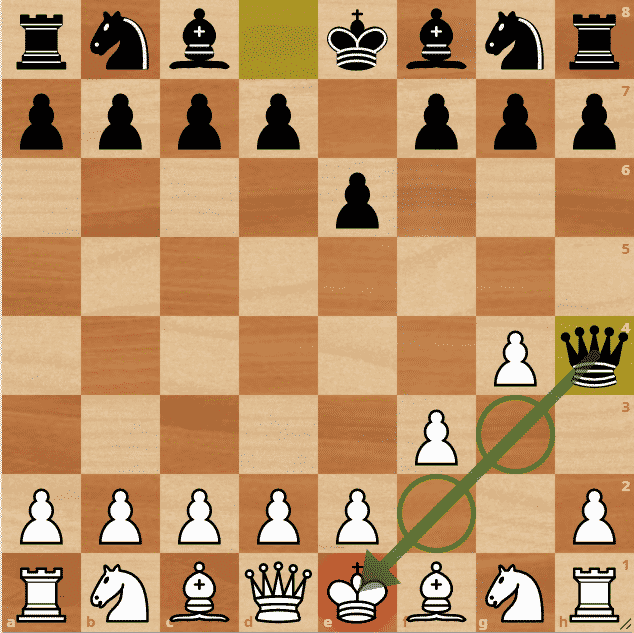
For more detail, check the page on this mate step by step.
You play White. Repeat the Scholar's Mate sequence: Bc4, Qh5, and exploit the careless Nf6?? to deliver mate.
4. Legal’s Mate
Legal’s Mate belongs to a different family. It’s not a direct queen attack: it’s a tactical trap where the opponent thinks they’re winning material and suddenly falls into a mating net.
The sequence involves an apparent queen sacrifice. The knight, bishop, and other pieces coordinate to close off every one of the king’s escape squares. If your opponent doesn’t know it, they rarely see it coming.
Learning it helps you spot two things: poorly coordinated opponent pieces and mating patterns that don’t depend on the queen.
How to avoid quick mates
Once you know these patterns, avoiding them is much easier than it looks. The recipe is almost always the same:
- Develop your pieces from the first move. A knight on c3 or f3 is worth more than a pawn on h4.
- Don’t move your castled pawns without a concrete tactical reason.
- Always watch the diagonal toward your king, especially in the first four moves.
- Castle early. Castling gets the king away from the center and makes any quick attack harder.
Want to build a solid foundation from the start? Study simple openings like the Italian or the Spanish: they give you natural development and protect the king from the beginning. Once you master this, quick mates will become a tool of yours, not a threat.
Preguntas frecuentes
What is the fastest checkmate in chess?
Fool's Mate: Black can be mated in 2 moves (1...f5 2.Qh5#), and White in 2 moves (1.f3 2.g4?? Qh4#). Mate in 2 is the fastest possible.
In how many moves can you deliver checkmate?
The theoretical minimum is 2 moves. In practice, the fastest known mates between decent players happen in 4-5 moves.
How do you recognize a quick checkmate?
Quick mates usually exploit the f7/f2 point (the weakest at the start), the h4-e1 diagonal, or leave the king with no escape square in the center.